Prediction markets vs sports betting is a question of where the cost sits in the price. A sportsbook builds its margin into the odds: a -110/-110 line carries a 4.76% overround on implied probabilities. On Polymarket the screen price is a midpoint, a buyer pays the ask, and takers pay a fee that scales with share price. The real price is the posted odds at a book, and the ask plus the taker fee on an exchange.
Who sets the price on a prediction market versus a sportsbook?
A sportsbook posts its own odds and keeps the margin; on Polymarket, prices come from users trading with each other rather than from the operator. That split decides where a bettor's cost shows up: inside the odds at a book, in the spread and an explicit fee on an exchange.
Whether that structure makes a contract a bet is a legal question, covered in how prediction markets are not gambling. This note stays on price.
| Cost layer | Sportsbook, -110/-110 | Polymarket |
|---|---|---|
| Price set by | The book's posted odds | Supply and demand between users |
| Cost inside the price | 4.76% overround | Bid-ask spread: a buyer pays the ask |
| Explicit trading fee | Margin sits in the odds | Taker fee: C × feeRate × p × (1 - p) |
| Who pays the fee | Every bettor, through the odds | Takers only; makers are never charged |
How does the bid-ask spread change the price on Polymarket?
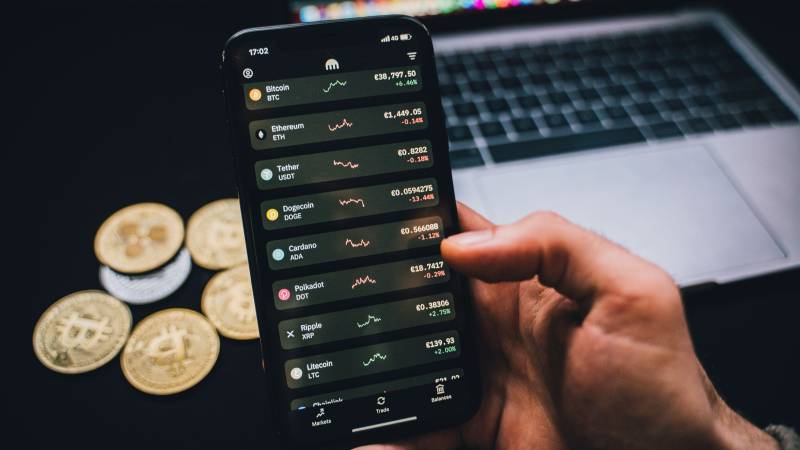
The displayed price is a midpoint, and a buyer pays more than it. Polymarket's own example uses a best bid of $0.34 and a best ask of $0.40: the market shows $0.37, but a buyer pays the $0.40 ask and a seller receives the $0.34 bid.
On thin books the screen number drifts further from a tradable price. When the spread is wider than $0.10, Polymarket shows the last traded price instead of the midpoint, so the figure on screen may sit away from the current bid and ask. For a comparison with sportsbook odds, the number to use is the ask a buyer would pay, not the midpoint.
How are prediction market fees charged?
On Polymarket, takers pay a formula-based fee and makers pay nothing. As of October 2026, Polymarket's fee page sets the taker fee at C × feeRate × p × (1 - p), with C the number of shares and p the share price. Makers are never charged fees, so a resting order that another user fills carries no Polymarket fee.
The p × (1 - p) term makes the fee symmetric: a 30¢ trade pays the same dollar fee as a 70¢ trade. A book's margin applies to every bet at the posted odds; the exchange fee depends on the price traded and on whether the order takes or makes liquidity. Turning the formula into a dollar figure needs the feeRate of the market being traded. How spread and fees behave on one event family is laid out in the hub on World Cup prediction markets.
Kalshi uses a different base. As of April 2026, Kalshi's help page describes its fee as a transaction fee on the expected earnings of the contract. Some Kalshi markets carry different fees, often around special events such as an election or a large sporting championship. Where maker fees apply, they are charged only when a resting order executes, and cancelling a resting order costs nothing.
How does a sportsbook's -110 overround compare?
A -110/-110 market prices both sides above even, so the book's margin is fixed before any bet is placed. The 4.76% overround on implied probabilities works out to about a 4.55% normalized margin.
In cash terms, with $110 on each side the book takes in $220, pays $210 to the winner and keeps $10, which is 4.55% of the handle. A bettor taking -110 on every bet needs a 52.38% win rate to break even.
What price does a bettor actually get?
At a book the posted odds are the full price, with the 4.76% overround already inside -110. On Polymarket the full price of a buy is the ask, not the displayed midpoint, plus the taker fee from the formula; a maker order that fills pays no Polymarket fee.
In the documented example, a buyer who reads $0.37 off the screen pays $0.40 before any fee. The figures to compare are the ask plus fee against the book's posted odds, on the same event at the same time.
Funding costs sit outside both pricing models. Polymarket charges no fee to deposit or withdraw USDC, though intermediaries may charge their own. Settlement of bets held on-chain is covered in the note on DeFi sports betting and on-chain settlement, and the wider set of prediction markets sector notes tracks platforms and volume.
Sector questions
Is a prediction market the same as sports betting?
Both price the outcome of an event, but the mechanics differ. On Polymarket, prices emerge from supply and demand between users, while a sportsbook builds its margin into the odds it posts, such as the 4.76% overround on a -110/-110 line.
What win rate breaks even at -110 odds?
About 52.38%. A bettor wagering only at -110 has to win that share of bets to break even, because the book's margin sits inside the odds.
Who pays trading fees on Polymarket?
Only takers. Makers, whose resting orders are filled by other users, are never charged.
Does Polymarket charge to deposit or withdraw?
Not for USDC, as of October 2026. Intermediaries used to move funds onto or off the platform may charge their own fees.
Data sources
- Polymarket Documentation, Trading Fees, undated, accessed October 30, 2026
- Kalshi Help Center, Fees, April 19, 2026
- Polymarket Documentation, Prices & Orderbook, undated, accessed October 30, 2026
- Bodog, What Is Vig in Sports Betting? Juice Explained For Bettors, undated, accessed October 30, 2026