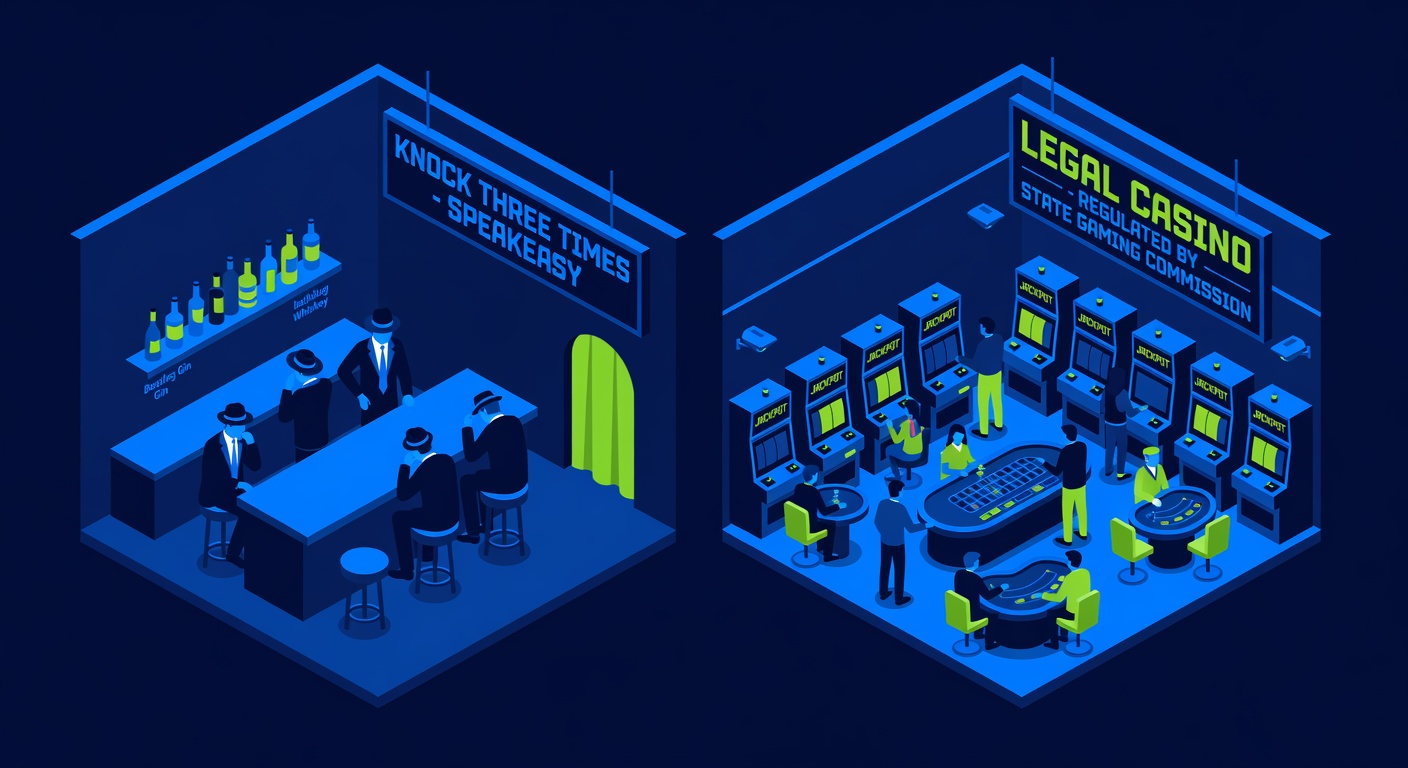
The Volstead Act took effect on January 17, 1920. Alcohol was illegal. Within months, speakeasies had replaced open saloons. Within a year, organized crime had moved into the alcohol business. By the end of Prohibition (1933), crime syndicates controlled the supply of alcohol in major cities. They also controlled everything else that was illegal: gambling, protection, women.
The interesting moment comes after Prohibition ended in 1933. Alcohol was legal again. Speakeasies closed or became legitimate bars. The criminal organizations that had built themselves on alcohol sales faced a problem: their primary business was gone. They needed a new revenue source.
Gambling was illegal in most states. Nevada had legalized gambling in 1931, just before Prohibition ended, but Nevada was a small territory. Most Americans could not easily access legal gambling. The criminal organizations saw the gap and filled it: illegal casinos.
Illegal casinos operated in back rooms, in basements, in private clubs. They had lookouts to watch for police. They had protection (bribing local law enforcement). They had games: blackjack, craps, roulette, baccarat. Anything that legal casinos in Nevada had, illegal casinos in New York, Chicago, and Los Angeles had too.
The Economics
The business model was simple: the house takes a percentage of every bet. The larger the pot, the larger the take. The illegal casinos wanted high-stakes games. They wanted whales (high-income players who could lose large amounts). They catered to wealthy businessmen, entertainers, and criminals themselves.
A player might walk into an illegal casino and lose 10,000 dollars in a single night. The house might take 5 percent of that, keeping 500 dollars. With 20 high-stakes games running every night, the casino made 10,000 dollars per night. Ten thousand dollars per night in the 1940s was substantial income.
The criminal organizations that ran these casinos diversified their operations. They had gaming, they had protection, they had other illegal activities. The casino was often the front. It was where money was laundered. It was where people were introduced to the organization. It was where power was displayed.
A successful illegal casino required several things: capital (to float the games), protection (to avoid police raids), talent (dealers and operators who understood the games), and customers (wealthy people willing to gamble illegally). The criminal organizations had all of these.
The Geography
Chicago had illegal casinos run by various organizations. New York had them as well. Los Angeles had a thriving underground gambling scene. Each city had a power structure that controlled the casinos. In some cities, it was Italian organized crime. In others, it was Irish. In others, it was Jews. The ethnicity did not matter. The business model was the same.
The competition between organizations sometimes led to violence. A casino that was protected by one organization could be raided or taken over by another. A dealer who was poached from one casino by another could trigger a war. The history of American organized crime includes many stories of casino-related violence.
But often there were arrangements. Different organizations would agree on territories. The North Side was one organization's turf. The South Side was another's. Within those territories, casinos operated with a reasonable level of security, knowing that raids were predictable and manageable through bribery.
The Eventual Legalization
The illegal casino era lasted until the 1970s and 1980s in most major cities. As state-level gambling legalization slowly spread, the illegal casinos became less necessary. New Jersey legalized casino gambling in Atlantic City in 1978. Illinois legalized riverboat casinos later. One by one, states legalized gambling.
As legal casinos became available, illegal casinos lost their customer base. Why go to an illegal casino with questionable security, protection issues, and risk of arrest when you could go to a legal casino with gaming protection and regulatory oversight? The illegal casinos faded.
The organized crime syndicates that had built themselves on illegal gambling adapted. Some invested in legal casinos. Others moved into other businesses. Some faded into history.
The lesson of the illegal casino era is this: prohibition creates opportunity for organized crime. When something is illegal but desired, someone will supply it. They will extract a large margin because of the risk. They will use violence if necessary to maintain their monopoly. The solution is not more prohibition. It is legalization combined with regulation.
Nevada understood this in 1931 by legalizing gambling when most of the country was still committed to prohibition. The federal government and most states did not understand it until decades later. By the time they did, organized crime had built itself into a permanent power structure. The casinos are gone, but some of the organizations they built remain.