
The Setup
Phil Ivey showed up at Crockfords Casino in London in September 2012. He was already one of the greatest poker players alive. But he did not come to play poker. He came to play baccarat. He brought with him a woman named Cheng Yin Sun, who had a particular skill. She could identify imperfections on the back of playing cards.
Baccarat is a game where both the banker's cards and the player's cards are dealt facedown at first. Ivey and Sun noticed something: the cards had slight asymmetries. The Gemaco cards used by Crockfords had a subtle pattern on the back that varied slightly depending on the card's value. A four had a different pattern than a five. To the human eye, the difference was nearly invisible. To someone trained to spot it, it was readable.
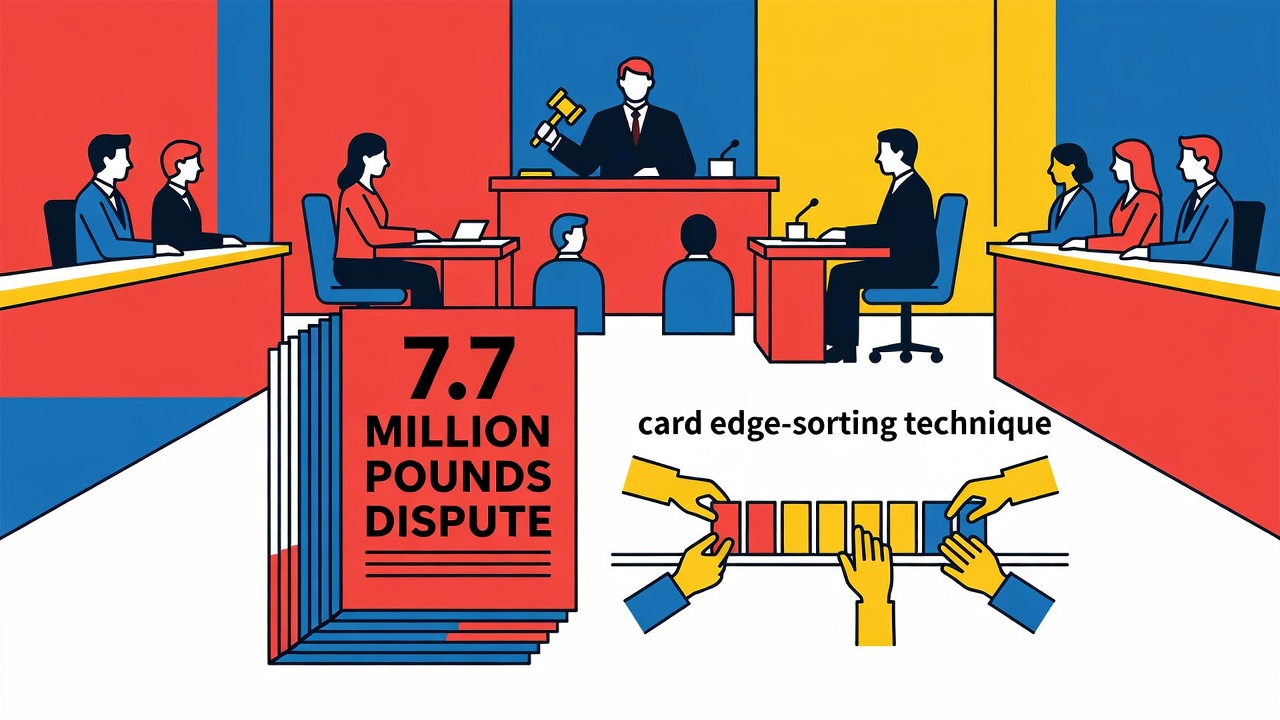
Over six nights in September, Ivey and Sun played baccarat at Crockfords. Ivey asked the dealer to orient the cards in a particular way as they came from the shoe. He used hand signals to communicate with Sun. Sun identified the card values before they were revealed. Ivey, knowing the dealer's and banker's cards in advance, placed his bets accordingly. He won 7.7 million pounds.
The Dispute and the Legal Claim
Crockfords refused to pay. The casino claimed that Ivey had cheated by using an accomplice to gain information. Ivey argued that he had done nothing illegal. He did not mark the cards, he did not manipulate the deck, he simply observed patterns that existed in cards the casino provided. Using visual information is not cheating, he said. It is player edge.
The question before the court was this: does a player have a right to use information obtained through keen observation to inform their betting? Or does the casino have the right to refuse payment when a player uses methods that the casino did not intend? The law was unclear. Few cases had examined this directly.
The Court's Decision
The UK courts ruled against Ivey in 2014. The Court of Appeal concluded that Ivey had indeed cheated, not by the letter of the law but by the spirit of the game. Cheating, the court said, includes gaining an unfair advantage through methods outside the normal play of the game, even if those methods do not technically violate written rules. The court acknowledged that Ivey had not broken any explicit rule. But he had circumvented the game's intended conditions.
The judge noted that if Ivey's methods were legal, then any player could bring a specialist to identify imperfections on playing cards, and the casino would be forced to pay. That outcome seemed absurd to the court. Therefore, the methods must be illegal even if the rules did not explicitly forbid them.
The Broader Implications
The case created a new standard in gaming law: casinos have the right to refuse payment to players who gain unfair advantage through methods that fall outside the spirit of the game, even if those methods do not technically violate written rules. This expanded casinos' discretion significantly. It meant that courts would now evaluate not just what the rules say but what the games are designed to do.
For Ivey, it was a rare loss. He appealed to the UK Supreme Court in 2017, and the Supreme Court upheld the Court of Appeal decision. Ivey did not get paid. Crockfords kept the 7.7 million pounds.
The Practical Consequence
Casinos worldwide began investing in new equipment. The imperfections that allowed card-reading became a liability. New shoes were designed with more uniform card backs. Surveillance was increased. The lesson was clear: any physical asymmetry in playing equipment could become an edge if a skilled observer found it.
For players, the case illustrated the boundary between clever observation and cheating. Ivey never pretended to be anything other than what he was: a world-class player using information available to him. But the courts decided that information was forbidden, that using it fell outside the bounds of lawful play. The decision protects casinos but narrows the space where player skill can operate.