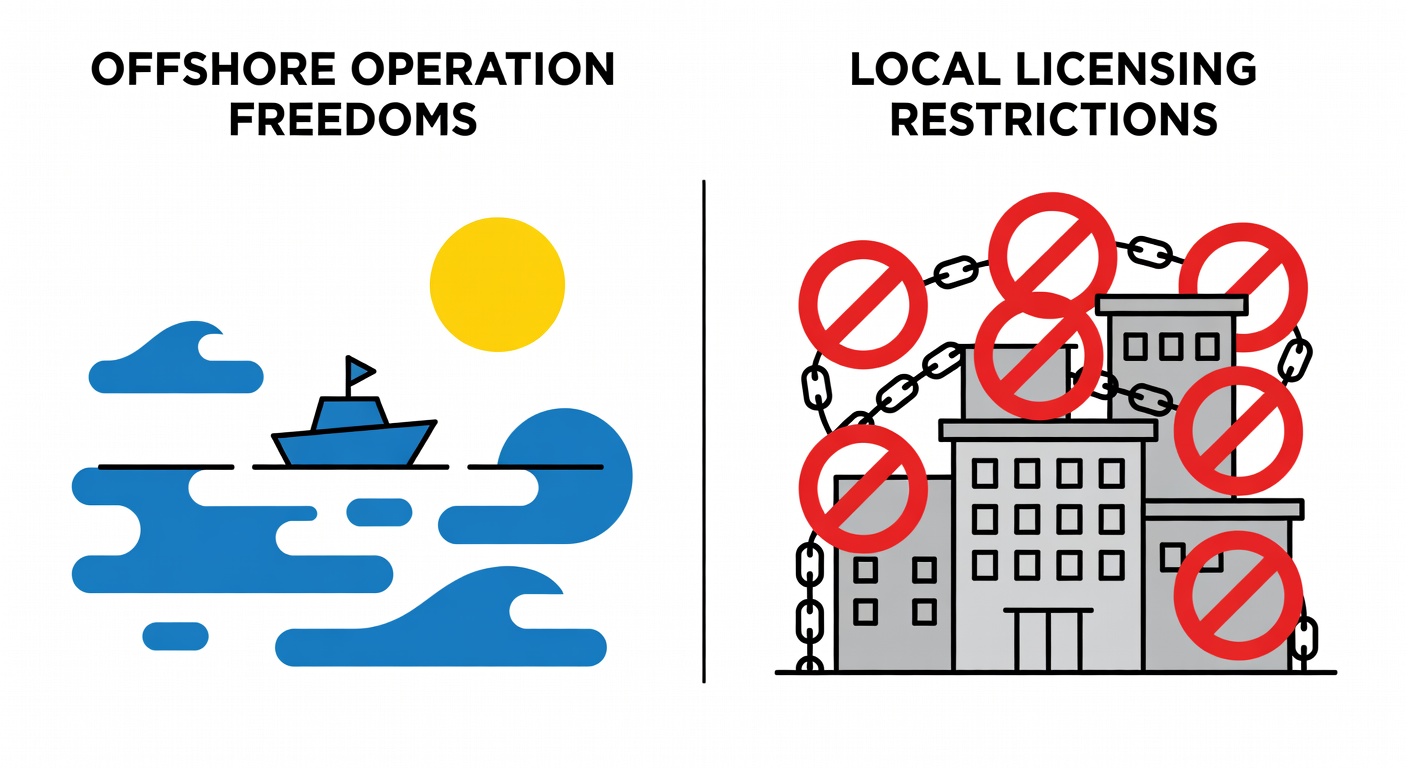
An offshore casino is one where the operator is licensed in a foreign jurisdiction and accepts players from your country. Examples: Curacao-licensed casinos that accept US players, Malta-licensed casinos that accept UK players, etc.
A locally licensed casino is one where the operator is licensed in your jurisdiction and operates under your country's gambling laws. Examples: DraftKings in New Jersey, Betfred in the UK, etc.
The key differences:
Offshore: minimal regulation, fast payouts (sometimes), no player protections if the site steals your money, access to prohibited games, anonymous play.
Locally licensed: strong regulation, licensed operators, player protection (in case of dispute), restricted game selection (games approved by regulators), verified identity required.
The appeal of offshore is access and convenience. You can play any game. You do not have to verify your identity. Payouts are sometimes faster than local sites. You can play from countries where gambling is prohibited.
The risk of offshore is that if something goes wrong, you have no recourse. If the site steals your money, you cannot sue in your home country. If you win and they refuse to pay, you cannot take them to court. You are trusting the site not to scam you. Some sites are trustworthy. Some are not.
The Regulatory Angle
Locally licensed casinos must follow specific rules. In most jurisdictions, these rules include:
Player protection: the casino must keep your money in a segregated account. If the casino goes bankrupt, your money is protected.
Verified RTP: the casino must display the return-to-player percentage of each game. These numbers are verified by independent auditors.
Responsible gambling: the casino must offer responsible gambling tools like reality checks and session limits.
Dispute resolution: the casino must have a dispute resolution process if you have a complaint.
Offshore casinos have none of these requirements (unless they voluntarily implement them). Some offshore sites have chosen to implement these anyway because it makes them more attractive to players. But they are not required to.
The Practical Differences
For a casual player, the difference might not matter. If you are betting small amounts and not expecting to win large sums, either type works.
For a high-stakes player, the difference is critical. If you are planning to win $10,000 or more, you want to be at a locally licensed casino. You have recourse if there is a dispute.
Many players use both. They use offshore casinos for games that are not available at local casinos (like certain crypto games). They use local casinos for their primary gambling.
The Regulatory Trend
Most jurisdictions are moving toward stricter licensing. They want operators to be licensed locally. They want player protection built into the system. They want taxes on gambling revenue.
This is pushing players away from offshore casinos and toward local ones. But offshore casinos still exist because there is demand for them and they are profitable despite the risks.
The wise choice is to use a locally licensed casino in your jurisdiction when one is available. If you want to play at an offshore casino, choose one with a solid reputation and be aware of the risks.