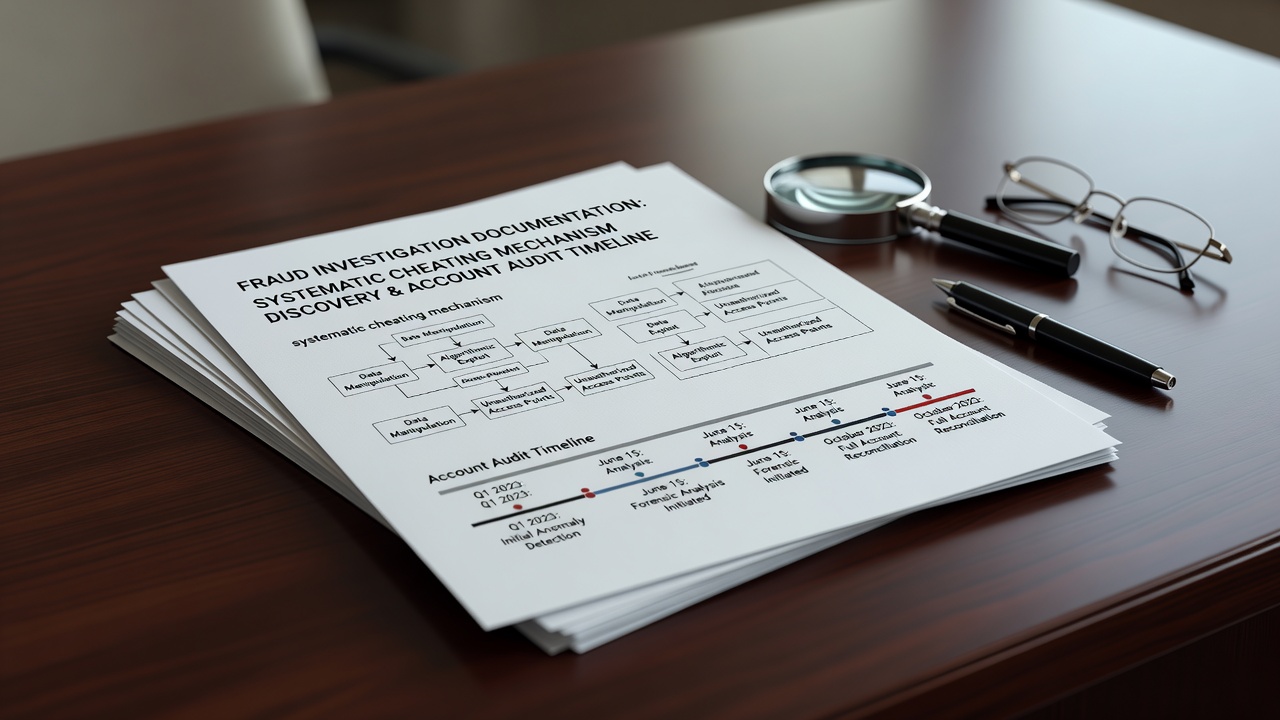
From roughly 2005 through 2008, Absolute Poker and UltimateBet (two major online poker sites) had software vulnerabilities that allowed insiders to see players' hole cards. Known as the superuser scandal, it involved employees or associates with administrator access using that access to gain information no legitimate player could have.
The superuser functionality was ostensibly built for debugging and administration. In practice, it allowed someone to view the hole cards of all players at any table in real time. Multiple individuals exploited this vulnerability across thousands of cash game hands, winning millions of dollars. The victims were all players who had deposited money on these sites believing the games were legitimate.
The scandal unraveled through detective work by experienced players who noticed one account winning at implausibly high winrates. Player communities began sharing data. Researchers analyzed it. The pattern became undeniable. Someone with knowledge of hole cards was playing. The sites were forced to investigate, acknowledge the breach, and compensate victims.
The aftermath was significant. Both sites lost player trust. Absolute Poker and UltimateBet never recovered. They eventually shut down or merged with competitors. Regulators tightened oversight of software security. The scandal demonstrated that even large, respected poker sites could be compromised.
The lesson is that online poker security depends entirely on software integrity and regulatory oversight. A site can be compromised, and players might never know during the exploitation phase. Post-scandal, improved oversight and better security practices reduced the risk, but the fundamental lesson remains: you are trusting the operator's integrity and the regulator's enforcement.
Key Considerations
The fundamental principle behind this topic involves understanding several interconnected factors. Each plays a distinct role in the overall picture. First, you must grasp the mechanism. Second, you need to recognize how it applies to your specific situation. Third, you should understand the exceptions and edge cases.
- The first consideration involves mechanics: how the system actually works
- The second involves application: how to apply knowledge to your situation
- The third involves exceptions: when normal rules do not apply
Different perspectives exist on this topic. Some emphasize one aspect more than others. The most complete understanding comes from considering multiple viewpoints and recognizing what each reveals about the underlying truth.
The practical wisdom here is that understanding requires both mechanics and experience. You can read about something theoretically, but real understanding comes from engagement with it.
Therefore, when you encounter this topic in practice, remember to think systematically about what is happening and why. The details matter. The structure matters. The exceptions matter. Approach it with the rigor it deserves.
The broader context here is important. This topic does not exist in isolation. It connects to other concepts and practices in meaningful ways. Understanding those connections deepens your comprehension significantly.
Practical Application
When you actually encounter this in the real world, remember the mechanisms we discussed. Apply them systematically. Avoid the common mistakes that trap most people. The mistakes are usually one of three types: misunderstanding the mechanics, misapplying the concepts to the wrong situation, or failing to recognize exceptions.
The path forward involves commitment to understanding. You cannot passively absorb this information. You must actively engage with it, test it against your experience, and integrate it into your actual practice. That commitment is what separates understanding from mere knowledge.