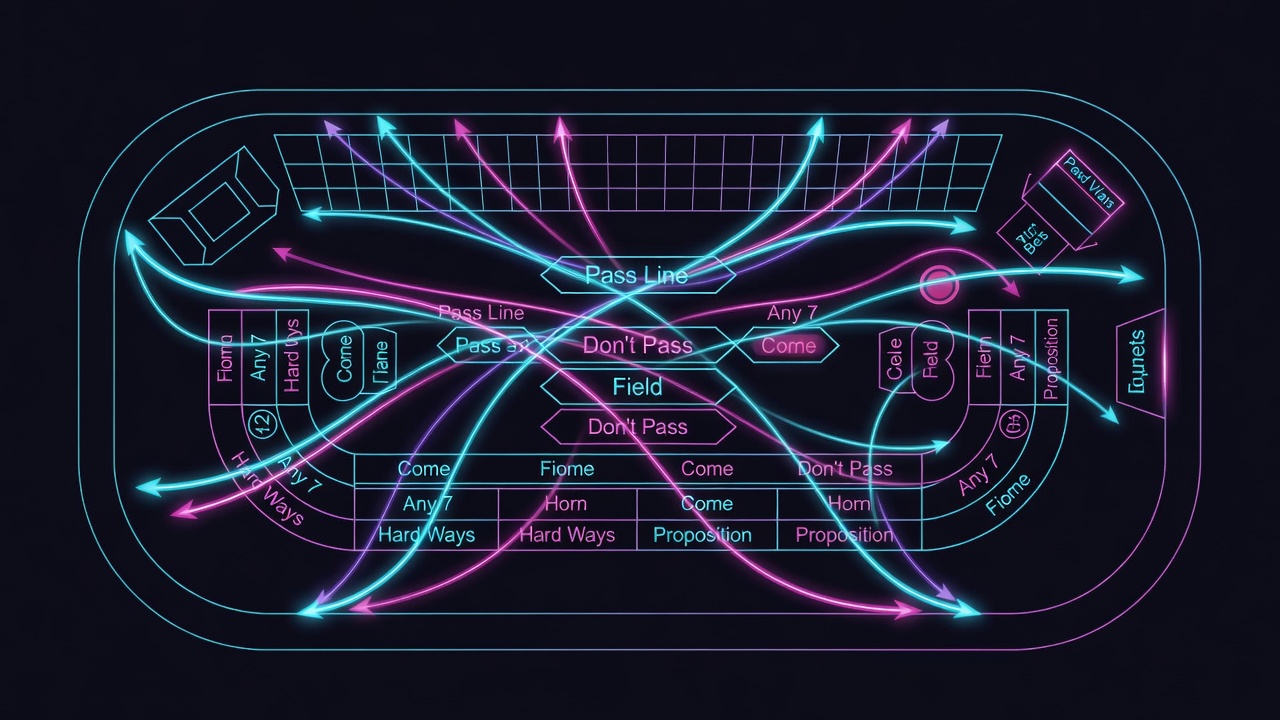
Craps is the only casino game where multiple people act simultaneously. The shooter rolls the dice. Multiple people have money on the outcome. Multiple people are cheering or groaning. The energy is physical.
The details of execution separate success from failure.
Mobile craps removes the physical aspect. You tap a button. The dice roll on screen. You see the outcome. It is sterile. It is identical to watching a slot machine, which makes sense because they are the same basic mechanics, just with different presentation.
The mathematics of mobile craps is identical to desktop craps. The house edge is the same. The probability of every outcome is the same. The payout ratios are the same. From a pure probability perspective, you are playing the same game.
But experience is not pure probability. Experience is psychological. At a real craps table, you are part of a collective. You are standing with people. You are sharing the outcome. When you win, people celebrate with you. When you lose, people commiserate with you. This collective experience is part of what people are paying for.
On mobile, you are alone. The app might show that other people are at the table, but you are not actually with them. You are playing alongside a simulation of other people. The social element is missing.
The practical consequence is that mobile craps feels slower and lonelier. The odds are the same. The house edge is the same. But the experience is diminished. Players who play mobile craps for extended periods often report less engagement and lower enjoyment compared to live or desktop.
Desktop craps is somewhere in between. You see other players. You are not physically with them. But the table feels like a table. The energy feels collected. The rolls feel significant. Desktop craps captures some of the social element without requiring physical presence.
The mathematical analysis would say they are equivalent. The experiential analysis would say mobile craps is inferior because it removes social context. If you are playing craps for mathematical reasons (trying to win money through correct odds), platform does not matter. If you are playing craps for entertainment, desktop or live is superior to mobile.
The deeper analysis of this topic reveals that players often overlook the foundational principles. When you understand the mechanics and the motivations behind the game design, you begin to see patterns that were previously invisible. This is where real advantage comes from, not from luck or superstition, but from careful observation and mathematical reasoning applied over time. Every decision matters. Every detail counts. The players who take the time to understand these nuances are the ones who make better choices at critical moments.
This consideration applies to all forms of casino gambling. The structure of the game, the rules, the house edge, and the player psychology all interact. Understanding these interactions is what separates informed players from recreational ones. An informed player makes conscious choices about risk and reward. A recreational player plays based on feeling and impulse. The result is predictable: informed players last longer and lose less.