What Is Zoom Poker?
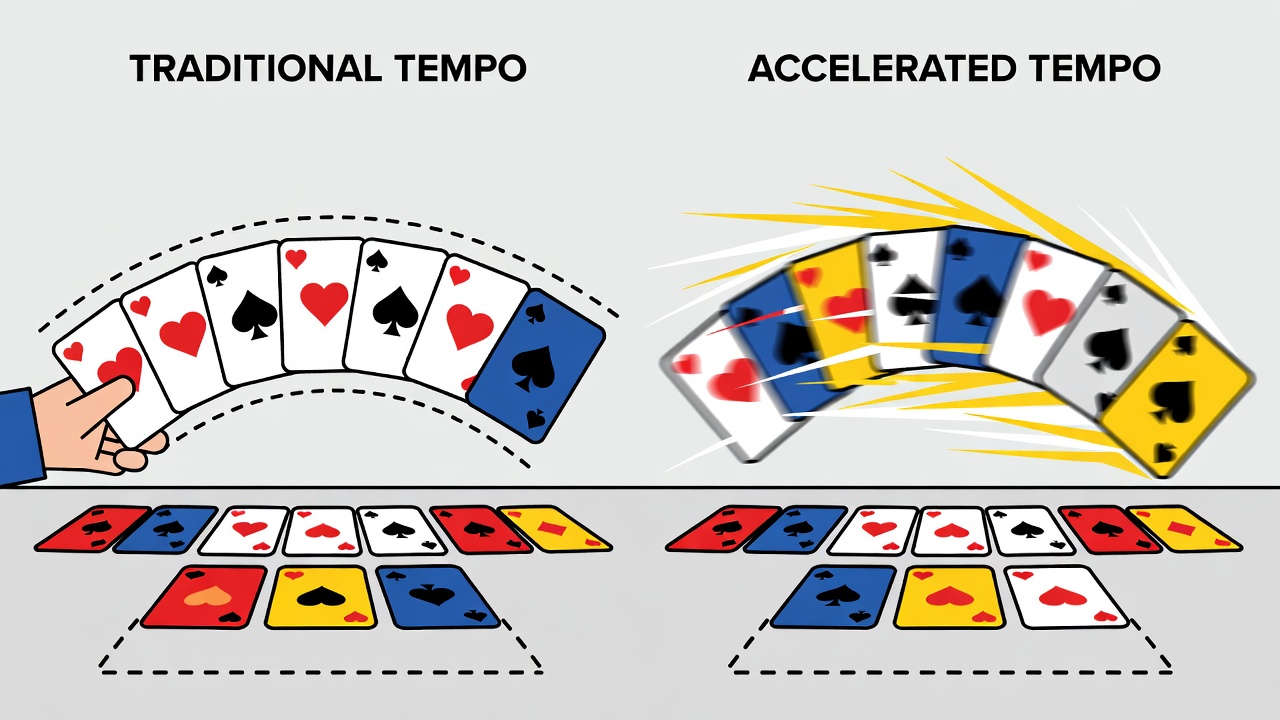
Zoom is a table format where you fold a hand and immediately move to a new table. You do not stay at the same table with the same opponents. Every time you fold, you are replaced by a new player and moved to a new game. The effect is constant action, no down time.
The speed is intense. In traditional full-ring poker, you play roughly 25-30 hands per hour. In Zoom, you play 80-100 hands per hour. More volume, less time spent waiting, more variance.
Hand Selection Changes
In traditional poker, position matters enormously. You play more hands late position (closer to the button), fewer hands early position. In Zoom, position still matters, but the relative importance shifts. With high volume and frequent table changes, you see every position constantly. You develop a faster rhythm.
Zoom players should tighten their range slightly. Why? Because the opponents are better. Zoom attracts grinders who understand the format. A hand that is marginal in casual games is a clear fold in Zoom. You cannot win money on marginal hands; you win on clear situations.
Aggression and Bet Sizing
In traditional poker, aggressive bet sizing is a signal. A big bet means something. In Zoom, opponents have no history with you. A big bet is just a big bet. They do not know if you are aggressive or cautious. This actually works in your favor. You can be more aggressive without building a "loose" image.
Bet sizes should be tighter and more standardized. A 2.5x raise from any position, every time. Consistency reduces the variance in opponent response. You are not sending signal; you are establishing rhythm.
Fold Frequency and Image
In traditional poker, if you fold 75 percent of hands, your opponents notice. They start raising your blinds. In Zoom, they never see your fold rate. You are new every hand. This allows you to fold frequently early on, building a tight early game.
But Zoom opponents also understand this. They know that Zoom players fold more because there is no table dynamic to exploit. So they compensate by stealing more. The equilibrium is different from traditional poker.
Mental Stamina
Zoom is exhausting. The constant action, the rapid decision-making, the lack of a break between hands. Traditional poker has downtime while others play. Zoom has none. You should plan shorter sessions (two hours instead of six) and expect fatigue to impact your decision quality after 90 minutes.
Statistical Variance
Because you see so many hands, statistical noise is reduced. A winning player's edge becomes visible faster in Zoom. If your true edge is 2 percent, you will see it in 1,000 hands of Zoom much more clearly than in 1,000 hands of traditional poker. The flip side: bad variance is also more visible. A 10-buy-in downswing hurts more when it happens quickly.
Table Selection
Traditional poker emphasizes finding good games. Zoom removes this. You are not selecting a table; the algorithm assigns you. Some opponents will be strong, some weak, randomly distributed. You cannot avoid tough spots. Your strategy must work against average opposition, not cherry-picked weak players.
The Rake Problem
Zoom takes more rake because there is more volume. You are paying rake on every hand that reaches showdown. At higher volumes, rake compounds. A game that is profitable at traditional speeds might break even at Zoom speeds because of rake. Calculate your rake burden carefully.
When Not to Play Zoom
If you are a specialist (you only beat weak opponents), Zoom is not for you. If you are a hand-reader (you exploit specific patterns in your opponents), Zoom is not for you. If you are a mental toughness player (you play your A-game under pressure), Zoom is good for you.
Zoom is for players who have solid fundamentals and can execute them fast. It rewards volume, consistency, and discipline. It punishes fancy play.