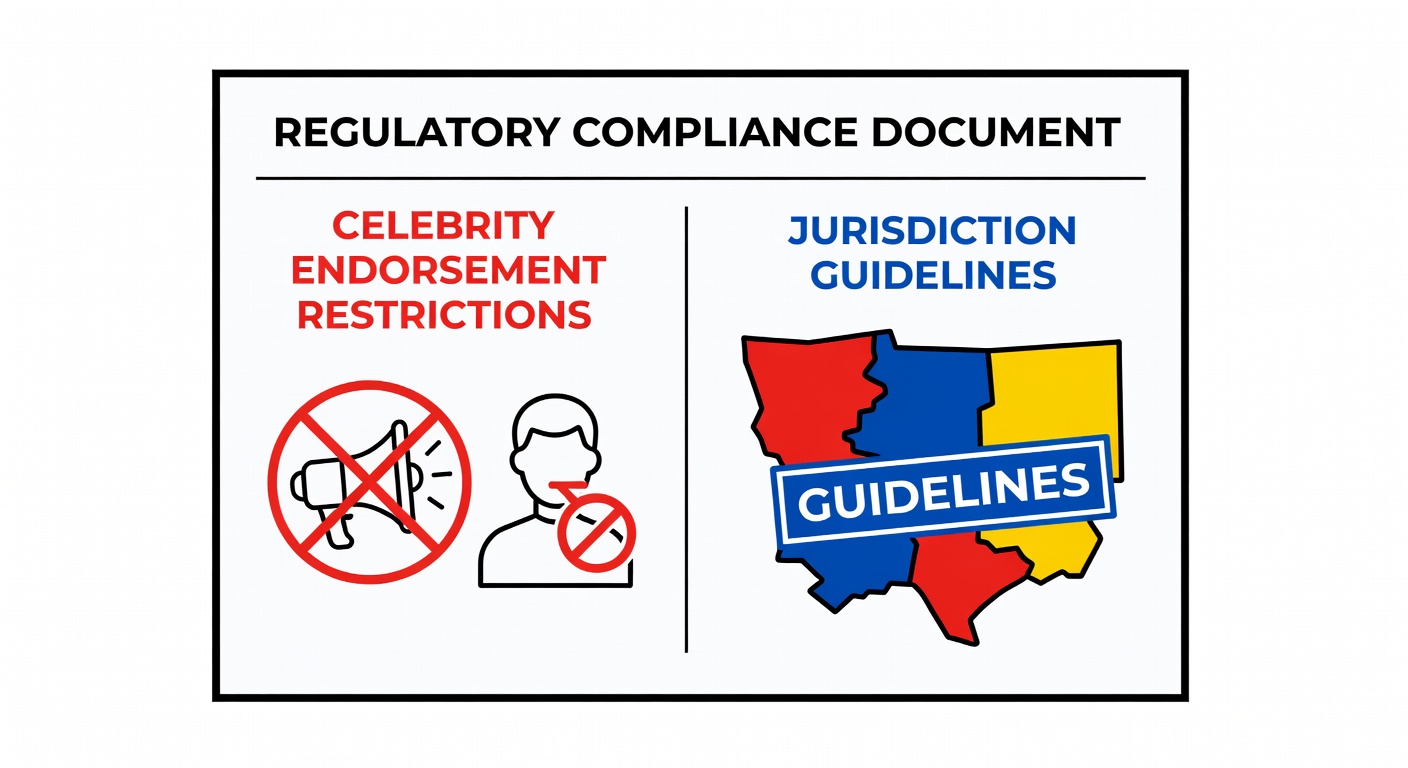
The ban on celebrity endorsements in gambling arrived not as a moral pronouncement but as a regulatory recognition. A jurisdiction does not forbid something without evidence that it causes problems. The problem, as regulators came to understand it, is not that celebrities are dishonest. It is that they are too honest: too visible, too trusted, too capable of influencing decisions in ways that the house prefers to control itself.
Consider the timeline. In the 1990s and 2000s, celebrity endorsements of casinos were common. Michael Jordan appeared in advertisements. Musicians promoted sports betting. Actors opened nightclubs in Las Vegas. There was no sense that this was objectionable. Then, around 2010, attitudes began to shift. The United Kingdom's advertising standards body noticed something troubling in their data. People were making gambling decisions based on celebrity association rather than on the math of the games themselves.
This is, to the regulator, backwards. A casino operates on principle. The odds are fixed. The house edge is what the house edge is. A person should make a decision to gamble based on their understanding of those odds and their own financial situation. When a celebrity enters the equation, that calculation breaks down. The person is not deciding based on information. They are deciding based on identification. They want to be like the person in the advertisement.
The Mechanism
Why is this a regulatory problem rather than a marketing problem? Because it creates a pathway for harm that the regulator cannot monitor. If a person walks into a casino because they think the game is fun, the regulator can track their losses and issue warnings. If a person walks into a casino because they see that their favorite actor also goes there, the warning lands differently. The person does not hear, "You are gambling." They hear, "This person I admire also does this thing."
This becomes acute in jurisdictions with vulnerable populations. A celebrity endorsement of a sportsbook reaches people who are less financially sophisticated. In the UK, for instance, football players endorsed betting apps to other football fans. The fans were often young men with limited financial experience. They saw their sports heroes using these apps and signed up. They then discovered, through experience rather than through warnings, what the odds actually were.
The regulatory answer was to ban celebrity endorsements entirely. This was radical. It meant that a footballer could not appear in a betting app advertisement. A musician could not promote a casino. An actor could not be associated with a gaming operator. The ban applied not just to traditional celebrities but to anyone with a large social-media following. An influencer with 500,000 followers was treated as a celebrity.
Some jurisdictions went further. They banned testimonials from professional gamblers and poker players. The logic was that a professional gambler is, by definition, a successful gambler, and this creates a false impression of what is possible. The regulator wanted the decision to gamble to be made by ordinary people with ordinary expectations of losses.
The bans were not universal. The United States, fragmented across state and tribal jurisdictions, never implemented a full ban on celebrity endorsements. Nevada allowed them. New Jersey allowed them. Operators continued to pay celebrities for promotions. But in the UK, Australia, and parts of Europe, the ban took hold.
What the Ban Actually Changes
One might ask whether a ban on endorsements actually reduces problem gambling. The evidence is mixed. Countries that implemented the ban did not see dramatic drops in problem gambling rates. But they did see changes in the composition of advertising. Instead of celebrity-driven campaigns, operators pivoted to emphasizing the games themselves. They advertised features, odds, bonuses. They did not advertise people.
This shift changed the conversation. An advertisement for a game is an advertisement for specific odds. An advertisement for a celebrity is an advertisement for a lifestyle. Regulators preferred the former. They could monitor the accuracy of claims about odds. They could cross-reference against the actual RTP (return to player) of the game. But they could not monitor the decision-making process of someone who wanted to live like their favorite actor.
Operators adapted in ways that regulators did not necessarily anticipate. Some shifted to sponsorships of sports teams, which are not quite endorsements but serve a similar function. A soccer team's jersey still reaches fans. A cricket team's sponsorship still creates association. The celebrity endorsement ban closed one door, but the underlying preference for celebrity association remained. Regulators are still working through how to address this.
What emerges from the case is a particular model of responsible regulation: the assumption that the regulator can engineer a decision-making environment where gambling choices are made more rationally. By removing celebrity influence, the regulator hopes to remove non-rational influence. Whether this works is less clear than the regulators hoped. But the choice to ban celebrity endorsements reveals something important about how different jurisdictions think about the problem. Some believe that removing persuasive influence is the regulator's job. Others believe that part of gambling is accepting persuasion, and the regulator's job is only to ensure odds are fair and losses are disclosed. These two models produce very different rules.