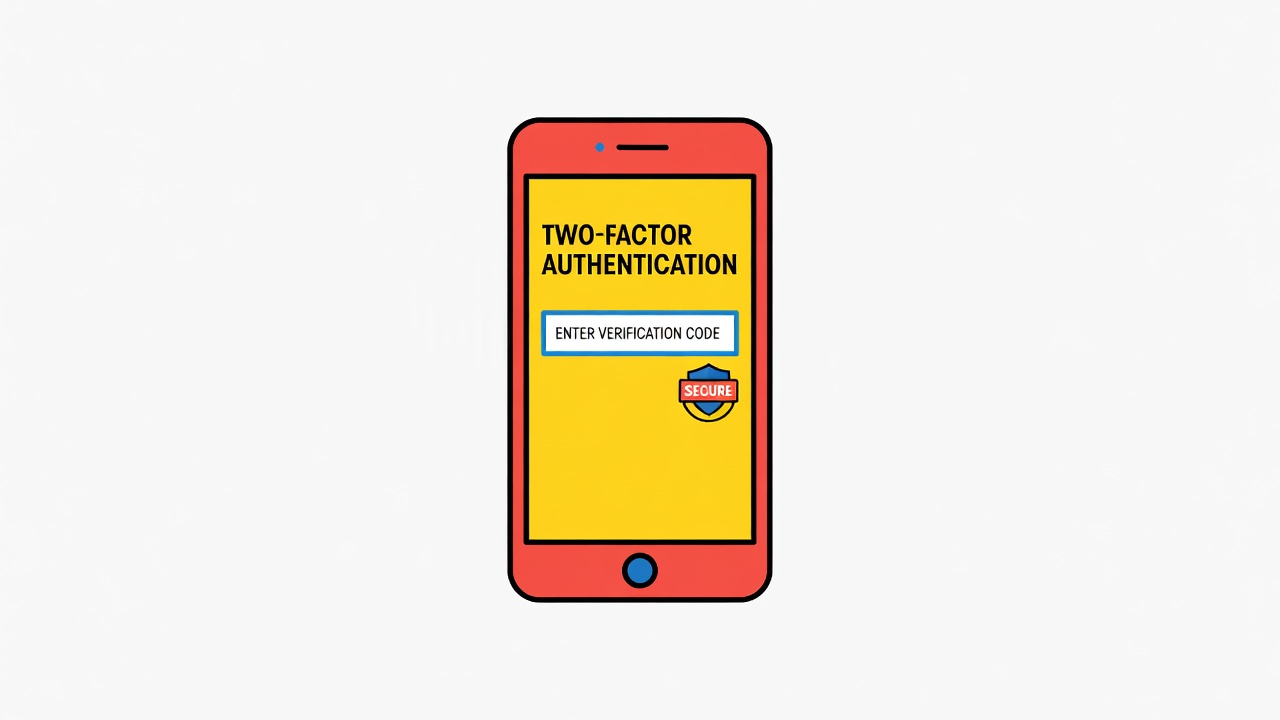
Two-factor authentication means you need two pieces of information to log in. First, your password. Second, something else. Usually a code from your phone. Sometimes a biometric. Sometimes a security key.
Understanding the game is half the battle.
A hacker who steals your password cannot log in if two-factor authentication is enabled. They have your password. They do not have your phone. They cannot generate the second code. They are locked out.
This is the most effective security available. It is not perfect. But it is close. The vulnerability is that the hacker could steal both your password and your phone. But this is harder than stealing just your password.
Why would a casino not require two-factor authentication on high-value accounts. I have no idea. But many do not. Many offer it as optional. The smart move is to enable it on every account that holds money.
The downside is that if you lose your phone, you could be locked out of your account. This is a real problem. But it is a solvable problem. You can add backup authentication methods. You can register multiple devices. You can set up account recovery.
From a security perspective, two-factor authentication should be mandatory. From a convenience perspective, it is an acceptable trade-off. Slightly less convenient for significantly more security.
The deeper analysis of this topic reveals that players often overlook the foundational principles. When you understand the mechanics and the motivations behind the game design, you begin to see patterns that were previously invisible. This is where real advantage comes from, not from luck or superstition, but from careful observation and mathematical reasoning applied over time. Every decision matters. Every detail counts. The players who take the time to understand these nuances are the ones who make better choices at critical moments.
This consideration applies to all forms of casino gambling. The structure of the game, the rules, the house edge, and the player psychology all interact. Understanding these interactions is what separates informed players from recreational ones. An informed player makes conscious choices about risk and reward. A recreational player plays based on feeling and impulse. The result is predictable: informed players last longer and lose less.
The Essential Takeaway
When evaluating casino games and gambling strategies, the most important principle is informed decision-making. You must understand the rules, the odds, the house edge, and the expected outcomes before you commit any money. This is not exciting. This is not glamorous. But this is what separates players who manage their losses from players who get crushed.
The mathematical foundation of casino gambling is immutable. The house has an advantage. This advantage is built into every game. Your goal should not be to beat the house. Your goal should be to understand the house advantage and make peace with it. Once you accept that you are going to lose money over time, you can make rational decisions about how much you are willing to lose and what experience you want to purchase with that money.
This principle has guided successful gamblers for generations. They do not expect to win. They expect to lose at a predictable rate. They budget their money accordingly. They play within their bankroll. They quit while they still have money left. These boring principles are what keep people in the game and keep them from catastrophic losses.
The players who struggle are the ones who believe they can beat the house. They think they have found a system. They think they understand something the casinos do not. They think they can win through skill or discipline or luck. Eventually, the mathematics catches up. The house edge compounds. The losses accumulate. The player is left with nothing.
Your job as a player is to respect the mathematics. Accept the house advantage. Play within it. Enjoy the game for what it is: entertainment that costs money. If you can afford that cost and you understand what you are paying for, then the game is reasonable. If you cannot afford the cost or you believe you can beat the mathematics, then the game will destroy you. Choose wisely.