
The Flash Era Problem
Before 2012, mobile casino games were Flash applications. Flash was the dominant web technology for any interactive content, including games. Flash ran in browsers on desktop computers. On mobile devices, Flash was a disaster. It burned battery, crashed constantly, and was incompatible with iPhones and iPads because Apple refused to support Flash on iOS.
Casinos had two choices: build a native app for each platform, or accept that Flash would not work on mobile. Most chose native apps, which meant different code for iOS and Android, different testing, different deployment. It was expensive and fragmented.
HTML5 and the Unified Codebase
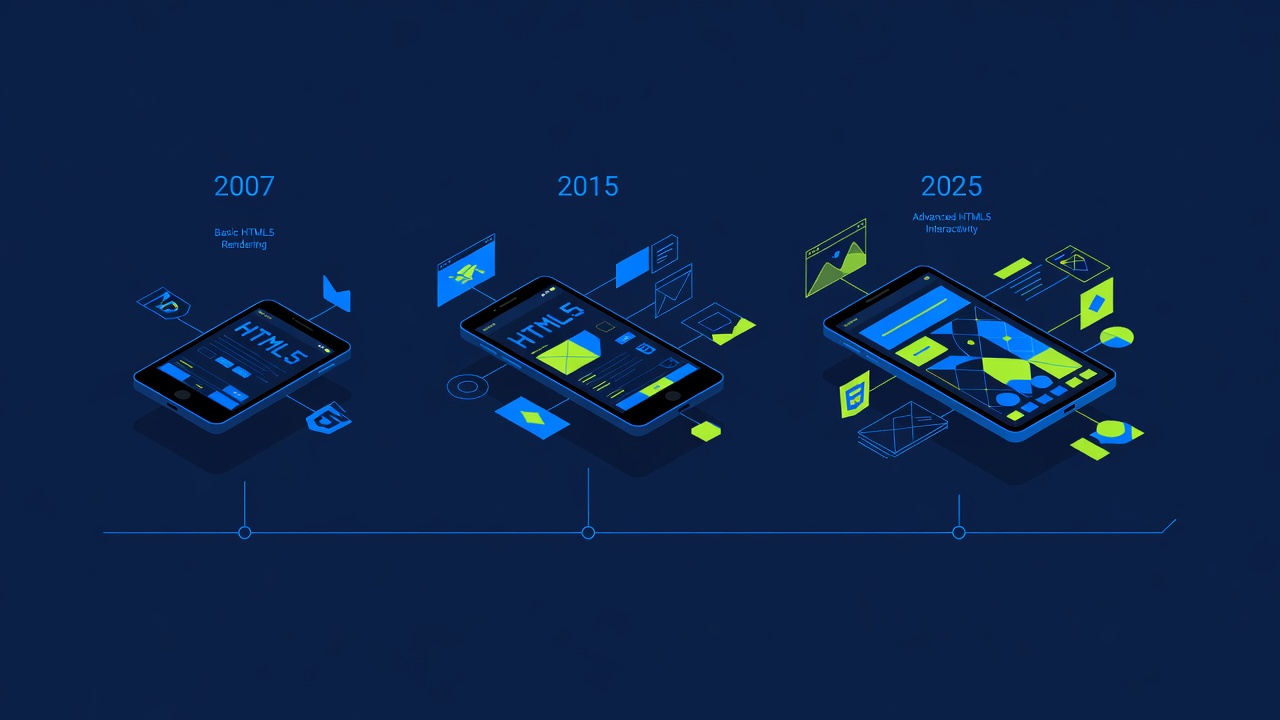
HTML5, standardized in 2014, included Canvas, WebGL, and audio APIs that made web-based graphics viable without Flash. A casino could now write a game in HTML5 that ran identically on iOS, Android, desktop, and any browser. One codebase. One set of tests. One deployment.
This was revolutionary not because HTML5 was technologically superior to native code, but because it eliminated the fragmentation tax. A game company with fifty employees could now build casino games for every platform without tripling its engineering headcount.
Performance and Smoothness
HTML5 games on mobile were initially slower than native apps. WebGL had overhead. Canvas drawing was not as optimized. But within three years, mobile CPUs became fast enough that the difference disappeared. By 2016, an HTML5 roulette game on a modern phone was as smooth as a native version. Battery usage was comparable. The user experience was indistinguishable.
Responsive Design
HTML5 enabled responsive design. A single game could detect the device's screen size and orientation, then adapt the interface accordingly. Portrait mode on a phone would stack controls vertically. Landscape on a tablet would spread them horizontally. This flexibility was impossible in native apps and extremely difficult in Flash.
Real-Time Delivery
HTML5 games could be updated instantly. A native app required the user to download and install an update. An HTML5 game updated the moment a new version was deployed to the server. Casinos loved this because they could fix bugs, adjust payouts, or introduce new features without waiting for app-store approval or user action.
Progressive Web Apps
HTML5 enabled Progressive Web Apps, which are websites that behave like native apps. A casino could ship a PWA that users could install on their home screen, which would load even when offline and could send notifications. This blurred the line between web and app. Users did not need to visit an app store; they could simply visit the casino website and install it as an app.
The Current Landscape
Today, the majority of mobile casino games are HTML5. Some casinos still maintain native apps for legacy reasons or for features that HTML5 cannot easily replicate, but HTML5 is the standard. A large operator like Pragmatic Play or Evolution can deploy a new game to hundreds of casinos simultaneously because the game is HTML5. It works on any device. It requires no installation. It updates instantly.
The shift from Flash to HTML5 was a technical transformation, but its real impact was economic. It lowered the cost of building for mobile. It accelerated the pace of innovation. It made mobile casino gaming a sustainable business model rather than a specialized expense.