The Raw Requirements
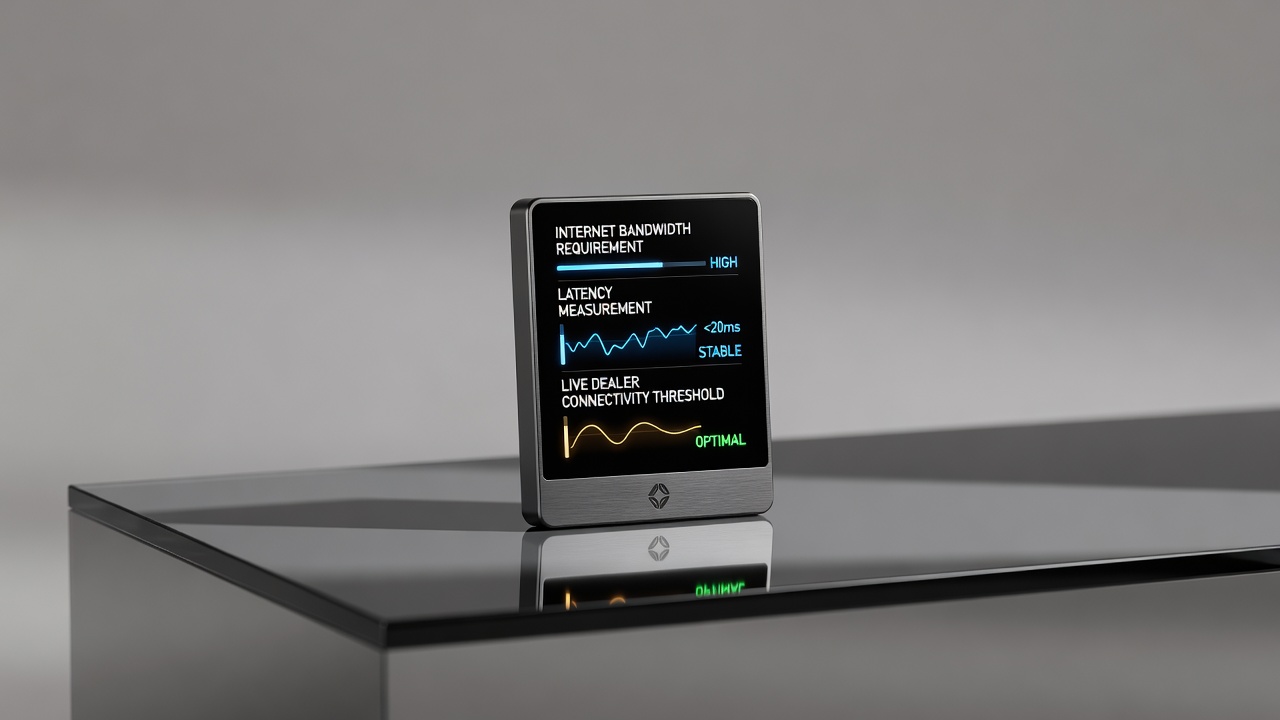
Live dealer games stream video from a casino studio to your device. That video is the entire experience. The minimum required speed is 2 Mbps for a stable 720p stream. That is the bare minimum. If your connection is slower, the stream will buffer, freeze, or drop entirely. The game becomes unplayable.
The recommended speed is 5 Mbps if you want a smooth 1080p experience. That speed allows for some bandwidth fluctuation without degradation. If your internet varies (as most home connections do), you want 5 Mbps as your baseline, not your peak.
For 4K streams, which some providers are beginning to offer, expect to need 15 Mbps. This is still a minority offering, but it is coming.
By Game Type
Live blackjack requires steady video of the dealer's hands and the cards. 3 Mbps is adequate for this purpose. The image is not moving quickly. The camera angle is fixed. The codec can compress effectively.
Live roulette needs fast video to capture the wheel's spin and the ball's motion. To see the spin clearly without artifacts, you need 4-5 Mbps. Lower speeds will still work; you just will not see the spin detail clearly.
Live baccarat is similar to blackjack. The camera is mostly stationary. 3 Mbps suffices.
Live slots or other games with animation need 5-6 Mbps because the screen is constantly changing. Animation requires more bandwidth than static images.
What Happens Below the Threshold
If your speed drops below 2 Mbps, the stream will buffer. A buffer is when the video stops downloading faster than you are watching. You see the dreaded "buffering" circle. The game pauses. You are still connected, but you are waiting for video data.
Buffers happen for a few seconds and then resolve. If they happen repeatedly, the connection is unstable. You should pause or quit. Continuing to play with frequent buffers is frustrating and risky.
Ping and Jitter
Speed is bandwidth. But latency (ping) and jitter (variation in latency) also matter. You can have high bandwidth but high latency, which causes video to lag behind real-time action. Acceptable ping is below 100 milliseconds. Acceptable jitter is below 30 milliseconds of variation.
Most home internet meets these standards. Mobile internet sometimes does not. A 4G connection in a crowded area might have acceptable bandwidth but high jitter, which causes video drops even though speeds test fine.
Testing Your Connection
Use a speed-testing tool like Speedtest.net. Run the test multiple times at different times of day. Live dealer games are most reliable when your average speed exceeds 5 Mbps and your ping is below 50 milliseconds.
If Your Speed is Insufficient
Most live casinos allow you to reduce video quality. The game interface will have a settings button. You can select "low quality" or "SD" instead of "HD." This reduces bandwidth requirements to 2 Mbps or less. The video quality drops noticeably, but it remains playable.
Alternatively, you can reduce the number of active streams. If you have other devices downloading or streaming video, pause them. Live dealer gaming takes priority.
Wifi vs. Wired
Wifi is convenient but less stable than a wired Ethernet connection. If you have poor wifi signal, run an Ethernet cable to your device (if possible) or move closer to the router. Wifi strength varies minute to minute. Wired connections are consistent.
Mobile Considerations
Mobile data is less stable than home internet. 4G connections deliver sufficient speed in most cases, but peak-hour congestion can degrade performance. 5G is more stable but not yet universally available. If you play live casino games on mobile, do it during off-peak hours or on wifi.