eCOGRA is an independent testing laboratory founded in 2000, headquartered in South Africa, and now owned by Entain, a multinational gaming operator. Its primary function is to test online gaming software for compliance with minimum standards of fairness and randomness. Operators who wish to display eCOGRA certification must submit their games to testing, undergo regular audits, and maintain certain operational standards regarding payout percentages, game mechanics, and customer protection measures.
The eCOGRA seal, which appears on many licensed online casinos, is therefore a certification mark, not a guarantee. The seal means the games have been tested and passed testing at a particular moment. It does not mean the games are inherently safe, that the operator is trustworthy, or that your money is protected above and beyond what the seal explicitly covers.
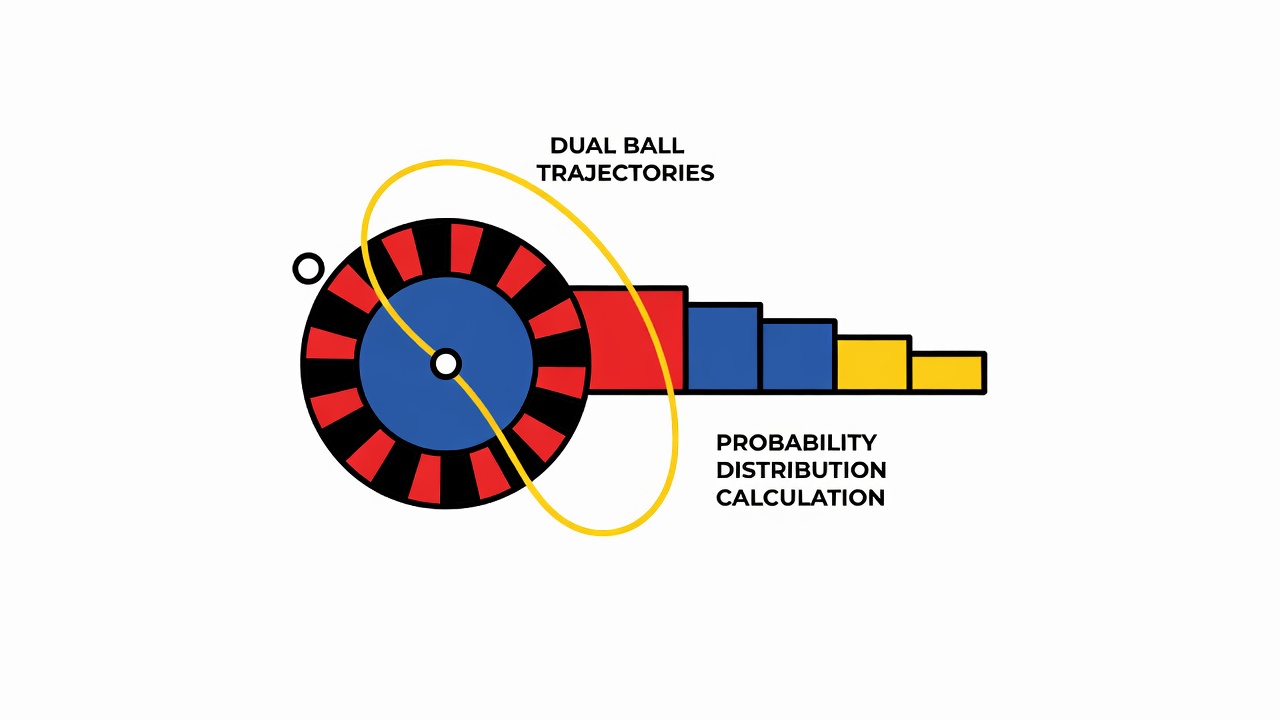
The testing itself focuses on three distinct claims. First, the game must have a documented RNG (random number generator) that produces results consistent with purported probabilities. eCOGRA tests this by running a statistical battery on a large sample of game results and comparing the observed distribution against the expected theoretical distribution. If a game claims a 96 percent RTP (return to player), eCOGRA verifies that a sufficiently large sample returns approximately 96 percent. Second, the game mechanics must function as documented. If a game specifies that a bonus trigger occurs with 1 in 200 spins, eCOGRA verifies that a large sample of spins produces bonus triggers at approximately that frequency. Third, the operator must have basic responsible gambling measures in place: the capacity to set betting limits, to self-exclude, and to access information about spending.
What the eCOGRA seal does not cover is operator solvency, payment processing, customer service quality, or the fairness of terms and conditions. An operator with an eCOGRA-certified game suite can still be insolvent, slow to pay, or contractually hostile. The seal speaks only to the games themselves. An operator licensed by a reputable jurisdiction like Malta or Curaçao carries more weight than eCOGRA certification alone, because those jurisdictions impose additional requirements on the operator as an entity, not merely on the software.
The historical moment matters. eCOGRA emerged in the early 2000s, when online gambling existed in a regulatory vacuum in most jurisdictions. At that moment, an independent certification body represented a meaningful signal. Today, jurisdictions like the UK, Ireland, and Malta conduct their own testing or require operators to use certified labs. eCOGRA certification has become somewhat redundant in regulated markets, though it remains visible.
A player encountering an eCOGRA seal should interpret it correctly. It means the games have been tested and the RNG is functioning as documented. It does not mean the operator is safe, that customer funds are protected, or that the game is more fair than an untested game (though the documented RNG is better than no documentation). For true player protection, look first to jurisdiction. Is the operator licensed by the Malta Gaming Authority, the UKGC, or another first-tier regulator? Only then does eCOGRA certification add meaningful value.
Key Considerations
The fundamental principle behind this topic involves understanding several interconnected factors. Each plays a distinct role in the overall picture. First, you must grasp the mechanism. Second, you need to recognize how it applies to your specific situation. Third, you should understand the exceptions and edge cases.
- The first consideration involves mechanics: how the system actually works
- The second involves application: how to apply knowledge to your situation
- The third involves exceptions: when normal rules do not apply
Different perspectives exist on this topic. Some emphasize one aspect more than others. The most complete understanding comes from considering multiple viewpoints and recognizing what each reveals about the underlying truth.
The practical wisdom here is that understanding requires both mechanics and experience. You can read about something theoretically, but real understanding comes from engagement with it.
Therefore, when you encounter this topic in practice, remember to think systematically about what is happening and why. The details matter. The structure matters. The exceptions matter. Approach it with the rigor it deserves.