Vegas, 2003. Four in the morning. The Bellagio's high-limit section. Two players sit at a six-deck game. One sits alone at a double-deck game. The lone player looks lonely for a reason.
Double deck blackjack sounds like the holy grail. Fewer cards in the shoe. Fewer unknowns. Basic strategy counts work better. The house edge is theoretically lower. Why would anyone play six deck?
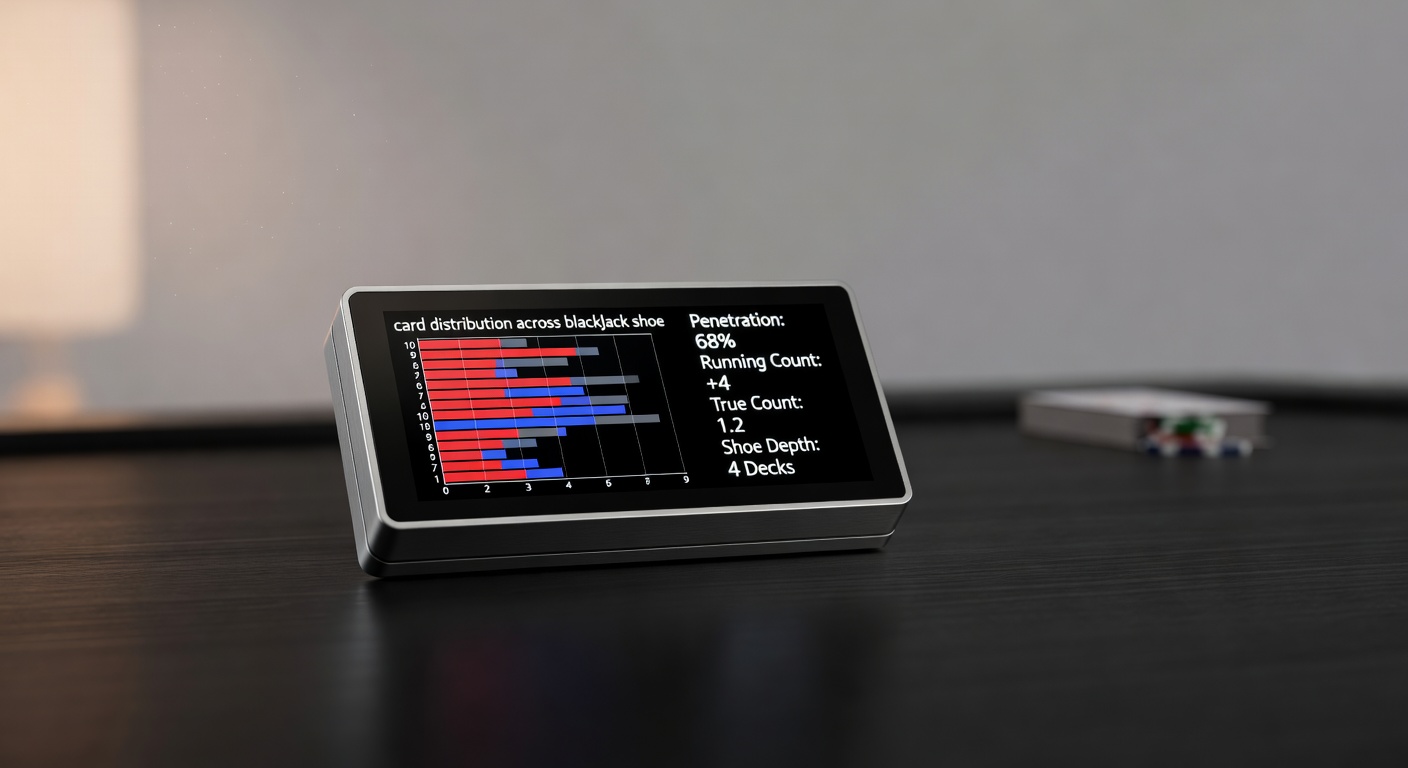
Because the casinos know what you know. They price the double deck game harder. The penetration tells the whole story. In a six deck shoe, dealers often cut off the last deck and a half. You see maybe 200 of 312 cards dealt. You shuffle before the probability gets really interesting. In double deck, casinos sometimes cut deeper, or they cut tighter. There's no consistency. But here's the catch: double deck gets reshuffled more often.
The Math
If you play 40 hands at a double deck table before shuffle, you've seen maybe 130 cards. The composition of the remaining shoe has shifted enough to matter. Card counters live for this situation. Bet spread opportunities emerge. But most blackjack players aren't counting cards. Most are just playing basic strategy and hoping for luck.
For the casual player, the edge is almost identical at double deck and six deck when the house is running both games honestly and with reasonable penetration. Six deck with poor penetration (60% dealt before shuffle) has a house edge of about 0.5%. Double deck with good penetration (75% dealt) also hovers around 0.5%. The differences flatten out when you account for how the casinos actually operate.
Where Double Deck Wins
Double deck wins in one specific scenario: when the casino offers you good penetration and decent rules. Bet365's live blackjack, for instance, offers double deck games with splits on most hands and decent payoffs. Evolution Gaming runs six deck games that feel like watching paint dry because the shuffle comes too often.
Double deck also wins in terms of action per round. Fewer cards dealt per hand means the shoe composition changes faster. If you're a casual recreational player who wants to feel like the odds are shifting, double deck gives you that sensation. It's probably placebo. But it matters psychologically.
Where Six Deck Wins
Six deck wins on consistency. The larger shoe means more hands between shuffles. That matters for bankroll management. If you're playing with a fixed stake, you know how long your money will last. The rhythm is steadier. Less disruptive shuffle animations on live platforms.
Six deck also wins on speed. Dealers work faster. The game flows. Casinos prefer this. Players who value time in action over theoretical odds also prefer this. Pragmatic Play's six deck offerings tend to run smoother than their double deck options because the house has optimized the shuffle intervals.
The Decision
Here's what matters: penetration first. Rules second. Card composition third. If you're sitting at a double deck table where the dealer shuffles after 40 cards dealt (25% penetration), you're getting robbed compared to a six deck table with 200 cards dealt (66% penetration). The double deck's mathematical edge means nothing if you never get to use it.
Ask the dealer. Some casinos will tell you. Some won't. If they won't, assume they're not trying to attract serious players. Walk to the six deck game. At least you know what you're getting.
The real answer: play whichever game has better penetration and looser rules, regardless of deck count. The casino is betting you won't do the math. Don't prove them right.