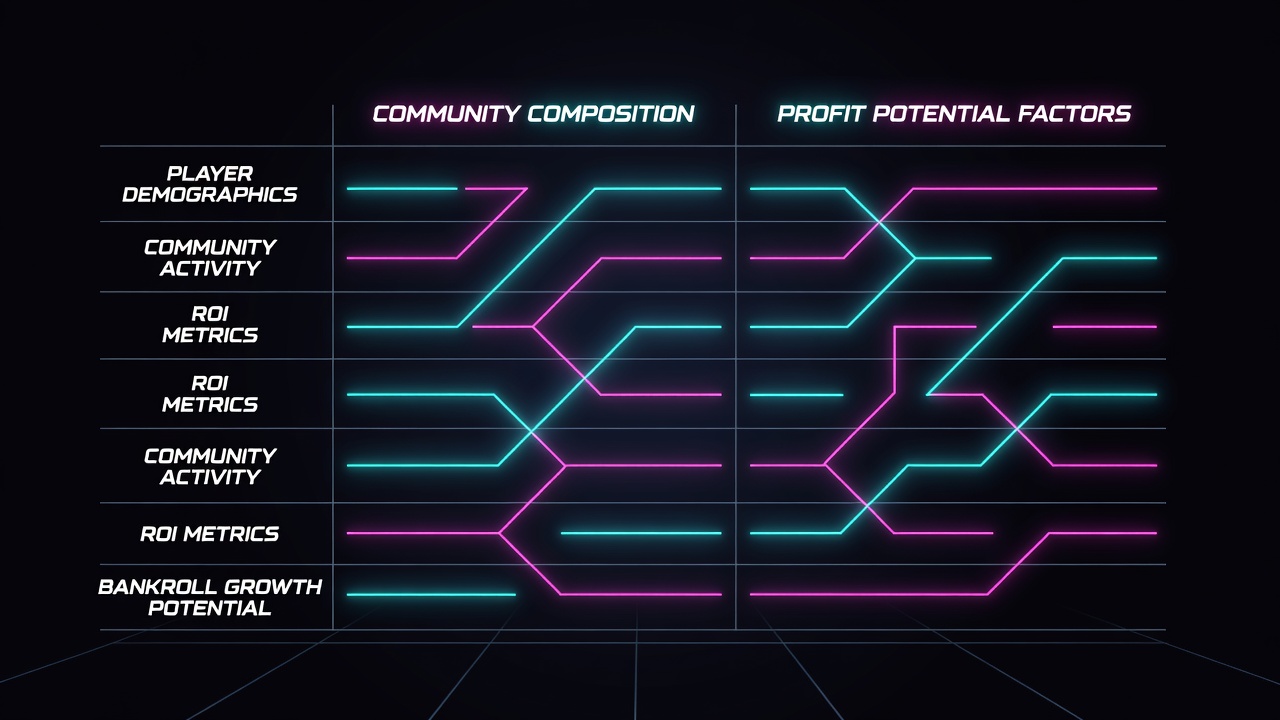
You are sitting at a bar at midnight, and someone tells you that the best poker game in the city is happening upstairs. You are intrigued. But before you go upstairs, you ask a simple question: who is playing? The composition of the game determines whether it is worth your time. The same principle applies to online poker sites. The software is irrelevant. The field is everything.
PokerStars is the largest poker site, measured by traffic, tournaments, and cash game volume. Enormous liquidity at PokerStars means you can find a game at any stake, at any time, in any variant. The downside is that the field is tough. PokerStars attracts serious players. If you are a recreational player, you will be outmatched.
GGPoker, licensed in the Philippines, has grown rapidly by offering recreational players favorable terms. Their tournaments have soft fields. Their cash games are full of tourist action. The downside is that GGPoker operates in a less regulated jurisdiction, so your legal protections are weaker. But if you are a decent player, the soft field might make up for the regulatory risk.
888poker attracts middle-market players. The site is secure, regulated by respectable authorities, and has a decent mix of professionals and amateurs. It is not the biggest site, but it is large enough to find games.
Choosing a poker site requires knowing yourself. If you are a professional player seeking maximum volume and the toughest competition, PokerStars and GGPoker are non-negotiable. If you are a serious amateur seeking a mix of legitimate competition and softer games, 888poker or smaller regional sites might be better.
Software quality matters but is overblown. Every major poker site has functional software. The real differences are minimal. You want table selection (the ability to see multiple games and choose the best one), a mobile app that does not crash, and a client that processes transactions quickly. Beyond that, software is background noise.
Bonuses matter only at the beginning. A big deposit bonus is attractive, but only if the playthrough requirements are achievable. A bonus with a forty-times requirement on thirty thousand hands of play is not achievable for a casual player. It is a marketing gimmick. A bonus with reasonable playthrough is real money.
Rakeback matters if you play high volume. Professional players negotiate rakeback deals that return portions of rake. For recreational players, rakeback is irrelevant.
The cardinal rule is this: choose a site where you know good players. Join the site where your poker friends play. Learn the games that are running. Get comfortable with the software and the schedule. Moving money between sites is a hassle. Once you choose, commit to learning that site's field.
A site is only as good as the games running at any given time. PokerStars might be the biggest site, but if the highest-value games are on GGPoker, you should play GGPoker. The field is the site. Everything else is infrastructure.
Key Considerations
The fundamental principle behind this topic involves understanding several interconnected factors. Each plays a distinct role in the overall picture. First, you must grasp the mechanism. Second, you need to recognize how it applies to your specific situation. Third, you should understand the exceptions and edge cases.
- The first consideration involves mechanics: how the system actually works
- The second involves application: how to apply knowledge to your situation
- The third involves exceptions: when normal rules do not apply
Different perspectives exist on this topic. Some emphasize one aspect more than others. The most complete understanding comes from considering multiple viewpoints and recognizing what each reveals about the underlying truth.
The practical wisdom here is that understanding requires both mechanics and experience. You can read about something theoretically, but real understanding comes from engagement with it.
Therefore, when you encounter this topic in practice, remember to think systematically about what is happening and why. The details matter. The structure matters. The exceptions matter. Approach it with the rigor it deserves.