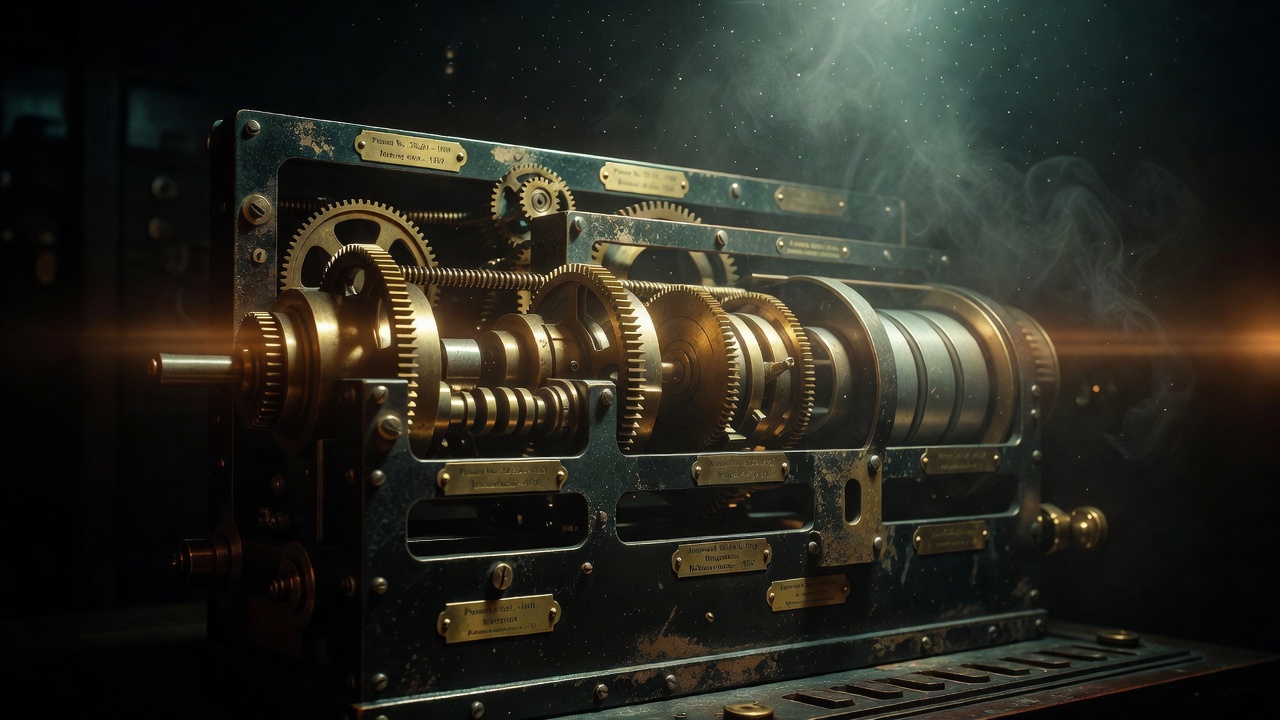
The first slot-like machines were made in 1891. The Sittman and Pitt machine had five drums that spun. You pulled a lever, the drums spun, you got paid if the drums landed on a winning combination. It was a gambling machine. It was not a great gambling machine.
Then Charles Fey made the Liberty Bell in 1895. Instead of five drums, Fey used three reels. Instead of poker hand combinations, Fey used symbols: bells, diamonds, spades, hearts. Instead of complex payouts, Fey used simple payouts.
Three reels instead of five made the machine simpler. Three symbols made the math clear. A player could understand at a glance whether they won. The Liberty Bell was popular because it was usable. The Sittman machine required a bartender to pay you out manually. The Liberty Bell paid automatically.
The Mechanical Innovation
Fey invented the mechanical hopper. This was a device that held coins and automatically dispensed them as a payout. Before Fey, a gambler had to call the bartender who had to manually count coins and pay you out. Fey's machine did it automatically.
This sounds trivial. It is not. The automatic payout changed the game from a novelty item (managed by a person) to a self-contained gaming device. You could walk away from a Liberty Bell with your winnings without asking anyone for permission.
The Design Constraints
Fey's design was constrained by the mechanics of his era. Mechanical reels cannot spin arbitrarily. They spin in steps, landing on specific symbols. This means the outcome is driven by the mechanical position of the reels. Fey had to design the machine so that landing on three bells (the high payout) was rare but possible.
The randomness of Fey's machine was mechanical randomness, not digital randomness. The reels spun at a deterministic speed. The lever release was mechanically timed. The outcome depended on physical factors: how hard you pulled the lever, how much inertia the reels had, how the brake worked.
This mechanical randomness created a sense of control that did not actually exist. A player could pull the lever hard and think they influenced the outcome. They did not. The lever's effect on the reel speed was negligible. But the illusion of control was psychologically real.
The Successor Design
Every modern slot machine is a descendant of Fey's Liberty Bell. Whether mechanical or digital, slots still use three reels (or visual representations of three reels). Slots still use symbols. Slots still provide automatic payouts. Slots still create the illusion that you influence the outcome through the lever pull (now a button press).
The core loop of Fey's design is unchanged: pull lever, reels spin, reels stop, check for win, collect payout, repeat. Digital slots have virtual reels instead of mechanical ones. But the visual representation mimics mechanical reels because the mechanical design became the expected interface.
The Game Design Lesson
Fey designed a game loop that was easy to understand and easy to repeat. Pull lever, watch reels, learn outcome in two seconds. No ambiguity. No decision-making after the pull. The mechanical simplicity made the game accessible.
Modern game designers borrowed from Fey's design principles. A game loop should be fast and clear. The player should understand immediately whether they won. The loop should be satisfying even on a loss (the spinning reels create tension and spectacle).
Fey understood feedback. A loss on mechanical reels is still entertaining because the reels are visible and the spin is dramatic. The loss itself does not feel like pure deprivation because the player watched the mechanism work. This is better game design than a text-based outcome.
The Business Legacy
Fey's design was wildly popular. By 1910, there were thousands of Liberty Bells in circulation. Other manufacturers copied the design. The patent Fey held was either weak or not enforced. Within a few years, dozens of companies were making three-reel slots.
Fey sold his manufacturing business and retired. He did not become wealthy in the way a modern patent holder might. But he established the design standard that would dominate for over a century.
The Endurance
The remarkable thing about Fey's design is its endurance. Mechanical slots were the standard for 80 years. Digital slots became common in the 1980s. But both still use three reels, still use symbols, still have the same basic mechanic. No designer has come up with something radically better.
There have been improvements (video paylines, bonus rounds, more symbols). But the core interaction is Fey's design. Pull lever, spin reels, check win. Everything else is elaboration.
This is rare in design. Most technologies are disrupted and replaced. Fey's design survived mechanical to electronic to digital transition and is still dominant. That is a testament to the clarity and usability of his original conception.