The high-limit room at a Macau junket has a certain rhythm. The player arrives with a briefcase of chips. Sometimes it is not physical chips. Sometimes it is a wire. Sometimes it is crypto. The infrastructure has adapted.
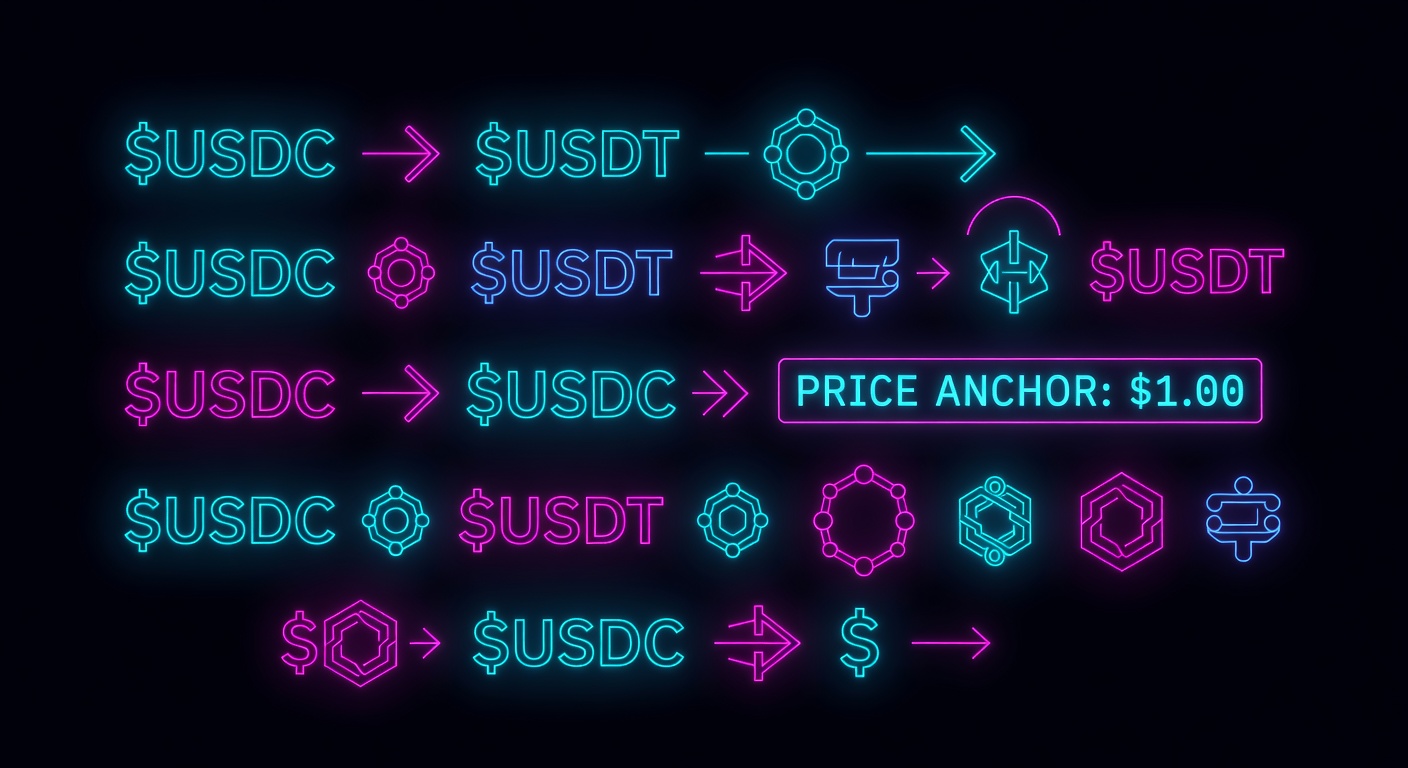
Stablecoins have emerged as a deposit method. USDT (Tether) and USDC (Circle) are the most common. They are crypto tokens designed to hold a value of one dollar. You send USDT to a casino wallet. The casino receives it. You play. You withdraw in USDT. The exchange rate never moved. You know exactly what you're risking in dollar terms.
Compare this to Bitcoin or Ethereum. Bitcoin arrived at $30,000. By the next morning it might be $28,000. Your bankroll shifted based on market volatility, not your play. With stablecoins, this doesn't happen. You deposit $10,000 in USDT. It remains $10,000 in value regardless of broader crypto markets.
The Appeal
For casinos, stablecoins are faster than bank transfers. A USDT deposit arrives in minutes. A bank wire takes days. Stablecoins are also harder to reverse. A bank wire can be disputed. A blockchain transaction is final.
For players, stablecoins are appealing because they avoid exchange rate risk and avoid the volatility of crypto markets. You feel like you are playing with dollars (because you are, effectively) while benefiting from crypto's speed.
Evolution Gaming accepts stablecoins at some tables. Stake explicitly promotes stablecoin deposits. DraftKings does not (as of this writing) but this may change.
The Risks
Stablecoins are only stable if the issuer maintains reserves. USDT is issued by Tether. Tether claims it holds one dollar of reserves for every USDT in circulation. Some auditors have questioned this. USDC is issued by Circle and is more widely audited.
If Tether loses control of its reserves (or if the reserve backing is actually insufficient), USDT could "depeg" and stop being worth a dollar. This happened briefly in May 2023 (USDT dropped to $0.95). The risk is real.
For casino play, a depeg means your bankroll has declined without any action on your part. You deposit $10,000 in USDT when it is worth a dollar. While you play, USDT depegs to $0.95. Your bankroll is now $9,500. The house didn't do anything. The market did.
The Mechanism
When you deposit USDT:
You hold USDT in a personal wallet. You initiate a transfer to the casino's wallet. The casino receives the transaction on the blockchain. Your USDT balance decreases by the amount transferred. The casino's USDT balance increases. Play begins.
When you withdraw:
You initiate a withdrawal from your casino account. The casino sends USDT from its wallet to your personal wallet. The transaction settles on the blockchain. You hold USDT again.
The casinos themselves often convert stablecoins to fiat currency (dollars) for their own operations. They don't hold USDT as a long-term position. They receive it, convert it, use the dollars for operations. This means they are hedging the depeg risk by not holding it long.
For players who withdraw in stablecoins, the risk stays with you. You hold USDT. If it depegs, your winnings are affected.
Best Practice
If using stablecoins for casino play, use USDC. It is better audited and has clearer reserve backing. Avoid USDT if possible, though it is more widely accepted.
Understand that a depeg event, while unlikely in the near term, is possible. Design your play around this risk. Don't hold all your winnings in stablecoins long-term. Convert to USD or crypto (Bitcoin, Ethereum) once you've cashed out from the casino.
The advantage of stablecoins (speed, finality, clarity of value) is real. The risk (depeg, issuer default) is also real. Use them with your eyes open.