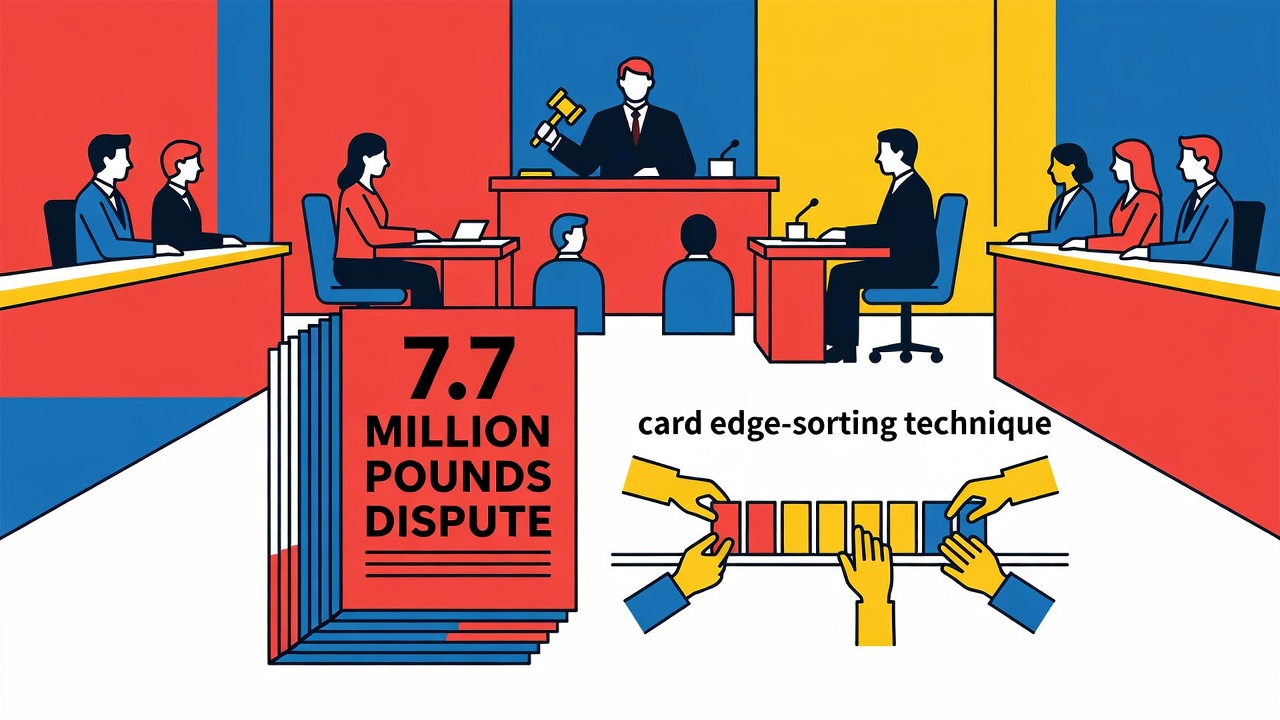

Edge sorting is not cheating. It is not illegal. It is also not tolerated by casinos, which is why the most famous edge sorter in gambling history was sued and lost millions.
Phil Ivey, one of the world's best poker players, visited the Borgata Casino in Atlantic City in 2012. He played baccarat. Baccarat is a simple game. Cards are dealt. One hand (the player) versus one hand (the banker). Higher total wins. If the banker and player tie, nobody wins. The odds are nearly even. The house edge is tiny.
Ivey played for hours. He won $9.6 million. The casino refused to pay. They claimed Ivey had cheated. The basis: he had used a technique called edge sorting to track high cards.
What Edge Sorting Is
Baccarat cards come from a shoe that is machine-shuffled. The shoe contains eight decks. The cards are dealt face-up (so everyone can see them) but the back of the cards are what matters. The back pattern of a baccarat card is not perfectly uniform. There are tiny variations. Imperceptible to casual observation, but visible if you know where to look.
On some cards, the pattern is slightly asymmetrical. The top and bottom of the card are not identical. This is a manufacturing quirk. High cards (10s, Aces) and low cards (2s, 3s) sometimes have different patterns. Nobody at the factory was trying to create this. It is incidental.
Ivey, working with a dealer and surveillance of the game, observed these pattern variations. He asked the dealer to orient the shoe in a specific way. He then tracked which cards, based on their back pattern, were likely to be high or low. Over thousands of hands, this gave him edge.
The advantage was not huge. Maybe 1-2 percent. But in high-stakes baccarat with million-dollar shoes, 1-2 percent edge on a $9.6 million win is real money.
The Legal Question
Did Ivey cheat? He did not touch the cards. He did not mark them. He did not swap them. He observed information that was observable (the backs of cards are visible) and used it to make better decisions. This is not cheating in the traditional sense.
But the casinos claimed Ivey had cheated by colluding with the dealer. The dealer, by orienting the shoe as Ivey requested, was an accomplice. The dealer was altering the game. Therefore, both the dealer and Ivey were cheating.
The case went to court. The Borgata sued Ivey in civil court. Ivey countersued. The courts ruled against Ivey. The judge determined that edge sorting was not a violation of law, but it was a violation of the casino's house rules. Since Ivey had engaged in edge sorting knowingly, he was in breach of the casino's terms of play. The casino did not have to pay.
The Practical Significance
Edge sorting is legal in the abstract. Casinos cannot prevent you from observing facts about cards. But casinos can refuse to play with you if they believe you are using edge sorting. And they can sue you if you win using it.
The ruling against Ivey did not declare edge sorting illegal. It determined that Ivey was in breach of the casino's implied agreement to play fairly. The casino had the right to refuse the payout and sue for the money back.
This created a strange situation: edge sorting is technically legal, but is so effectively banned (casinos will sue if they catch you) that it might as well be illegal. Nobody else has tried it in a major casino since Ivey because the legal liability is too high.
How Casinos Prevent It
Modern casinos now take steps to prevent edge sorting. They use cut cards that are uniform. They replace worn decks more frequently. They orient shoes in ways that make pattern observation difficult. They also watch for exactly the behavior that Ivey displayed: repeatedly asking the dealer to orient the shoe a specific way.
Dealers are trained to never orient shoes based on player requests. This breaks the pipeline that made Ivey's technique work.
The Bigger Picture
Edge sorting is one of several techniques that fall in the gray zone between clever play and cheating. Advantage play (card counting in blackjack, for instance) is legal but casinos can ban you for it. Edge sorting seems like it should be similar.
The difference: card counting requires you to memorize information given to you publicly. Edge sorting requires you to collude with the dealer to subtly alter the conditions of play. The court found this collusively cross the line into unfairness.
Ivey's case settled for a reported sum less than the original $9.6 million he won. He paid the casino something. The exact amount was sealed. He did not go to prison. He did not face criminal charges. But his reputation in gaming was altered. The story is now "the guy who edge-sorted his way to a win and then got sued," not "the guy who won through skill."