The Base RTP Framework
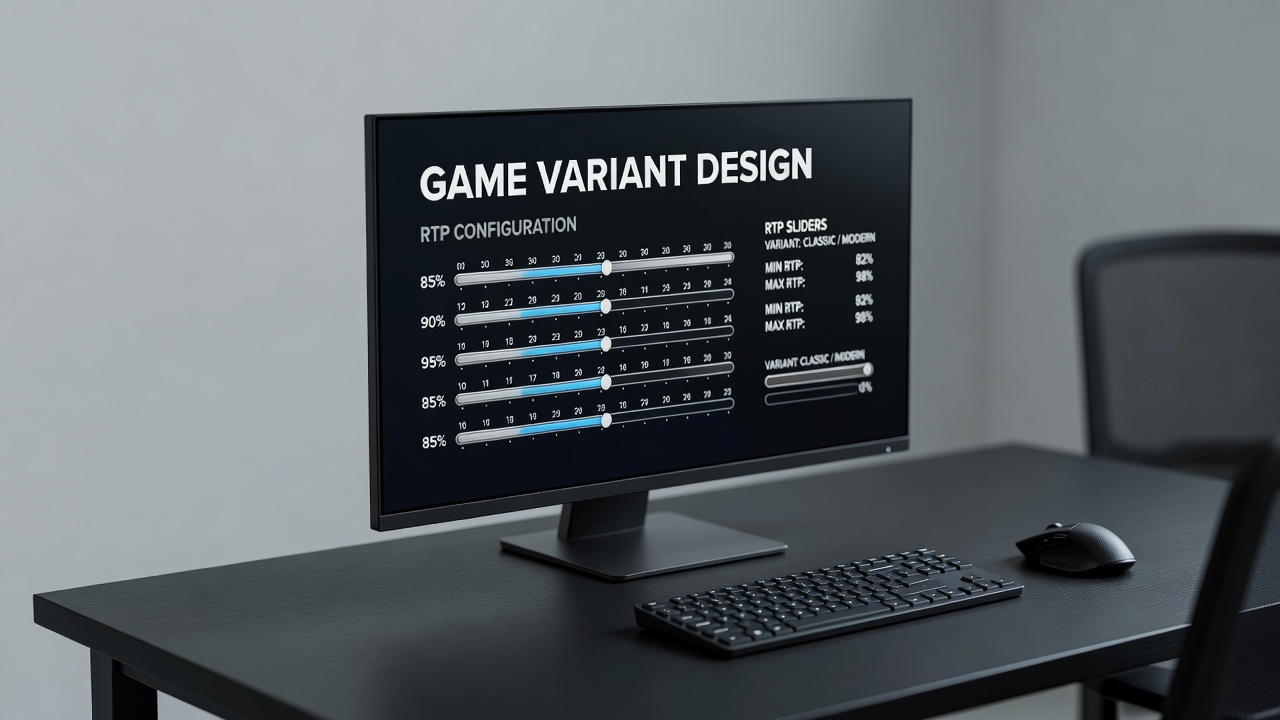
Blackjack's core is mathematically simple. The house edge on standard play is approximately 0.5 percent if the player uses basic strategy. That is determined entirely by the payout ratio on blackjack (3:2 vs. 6:5), the dealer's hit-on-soft-17 rule, and a few other mechanical details. A software provider designing a new variant starts with a specific RTP target, usually between 96 and 99 percent.
That target constrains everything else. If you want an RTP of 98.5 percent, you now have a budget of 1.5 percent house edge to distribute across your new feature. That budget cannot be spent freely; it must be allocated to sidebets, bonus mechanics, or rule changes that feel mathematically fair to the player while still favoring the house.
The Sidebet Strategy
Most new blackjack variants ship with at least one sidebet. The sidebet carries higher house edge than the main game, sometimes dramatically higher. A common sidebet is "Twenty-One +3," where the player can bet on whether their two cards plus the dealer's up card make a flush, straight, or three-of-a-kind. This sidebet might have a 3-4 percent house edge by itself, but it is optional. The player who plays only the main game gets a fair deal.
Here is the design genius: the sidebet is where the provider generates actual revenue. The main game operates at 96-98 percent RTP because players expect that. The sidebet operates at 94-96 percent RTP because players do not understand probabilities and the payout schedule obscures the house edge. A competent player avoids the sidebet entirely. A casual player loves it.
Mechanical Innovation
Some variants change dealing mechanics. "Infinite Blackjack" lets multiple players play the same hand. "Power Blackjack" adds a bonus payout if you hit and improve your hand. Each of these changes requires recalculating all probability distributions and ensuring that the overall game still returns the promised RTP.
The math is precise. A developer creates a simulation that plays millions of hands using basic strategy and calculates the actual payout percentage. Only when that percentage matches the promised RTP can the game ship to a regulator. This process is mandatory in most jurisdictions.
Player Segmentation
Providers create different variants targeting different player segments. A conservative variant might have 98 percent RTP and small sidebets. An aggressive variant might have 96 percent RTP with multiple high-volatility sidebets. A streamlined variant might eliminate some side bets entirely and offer a cleaner experience. Evolution and Pragmatic both maintain dozens of blackjack games simultaneously because different markets and different players respond to different mechanics.
Live Dealer Optimization
Live dealer blackjack adds a human dealer, a camera, and a real table. This costs more to operate but allows for more complex rule variations. A live game might offer "Lucky Loser," where a player loses to the dealer but receives a consolation payout based on their hand. That payout structure would be impossible in automated software; it is too unusual. But in a live context, where a human dealer can execute any rule, it is simple.
The Testing Phase
Before launch, the game is tested in a market with low-stakes play or in a beta environment. Pragmatic tests new variants at affiliate casinos and collects data on player behavior. Does the sidebet get played? What is the average bet size on the main game versus the sidebet? Do players understand the rules? Only after this data arrives does the provider roll out the variant to larger casinos.
First-Mover Advantage
The first software provider to launch a genuinely novel blackjack variant gains a temporary edge. Casinos are desperate for novelty because novelty drives player traffic. However, that advantage fades quickly. Within months, competitors copy the mechanics, tweak the payouts, and ship their own version. The blackjack variant market is now mature; innovation is incremental and RTP targets are narrow.